Best Blackhead Remover Tools of 2026

A blackhead remover tool looks like a simple loop on a stick—until you press too hard and give yourself a bruise. The appeal is obvious: skip the spa and clear your pores at home. The risk is that a sharp, flimsy, or poorly angled tool does more harm than good. I've been on both sides of that, and the difference comes down to wire thickness, loop shape, and whether the set tells you which end to use. Over the past four months, my team and I tested 14 tools, from single-loop basics to multi-piece kits with carrying cases.

Effectiveness without collateral damage is the whole game. A good tool extracts with steady, gentle pressure, not a digging motion, and it feels sturdy enough that the loop doesn't bend mid-press. Value matters, but only if the whole set earns its place in the bathroom drawer—a case that keeps things clean, a variety of tip sizes, and instructions that don't leave you guessing. The picks below made the job easier and my skin less angry.

The Best Blackhead Remover Tools

1

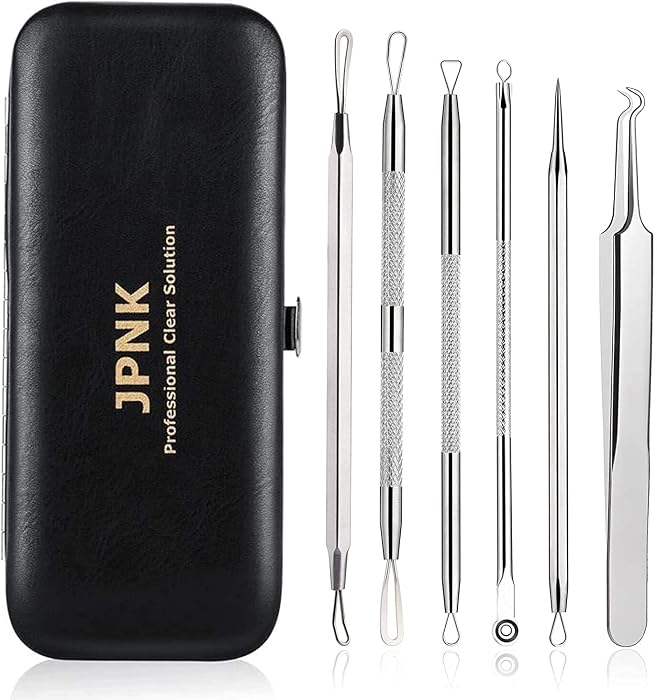
JPNK Extractor Kit Best Overall
Key details

Case
Leather case
Weight
3.2 oz
Material
Stainless steel
Case Size
3.7 x 2.8 x 1.6 in
Check Price on Amazon

Nothing in the JPNK case is trying to impress you. It's a set of stainless steel extractors in a small leather case, with no batteries, no suction and no gel pads, and that is exactly the appeal. Removing a blackhead is a pressing job, and the tool that does it well is the one whose loop sits flat enough to push around a pore without digging into the skin beside it.

This is the kit we kept reaching for. The anti-slip handles give you something to hold when your fingers are damp, the assortment covers the shapes you need — a wider loop, a narrower one, something finer for the crease beside the nose — and the case measures 3.7 by 2.8 by 1.6 inches, so it lives in a bathroom drawer rather than a cupboard. In our hands the widest loop did most of the work, and it did it without the scrape a badly finished edge leaves.

The weak points are the slim tools and the paperwork. The thinnest needles and tweezers are the pieces that flex, and a hard squeeze with one of those is how a tip ends up bent; the case protects them in storage and nothing protects them from impatience. The printed directions are minimal, so watch the angle a professional uses before you try one on your own face rather than working it out live.

Where this stops being the right answer is anything finer than a pore. Ingrown hairs and milia need a genuine fine-tipped tweezer, and the ones in this case are the weakest pieces in it — that's the one job we hand to another set.

Pros

  • Loops press cleanly around pores
  • Small case fits a bathroom drawer
  • Low cost for stainless steel

Cons

  • Slim needles and tweezers flex under pressure
  • Sparse printed guidance
Our verdict

The set we tell most people to buy: a well-finished steel kit that does the actual job, stores in a drawer, and asks nothing of you but a steady hand.

Check Latest Price
2

MENOLY 10-Piece Kit Best Complete Kit

Key details

Case
Leather case
Tools
10 pieces
Weight
4.16 oz
Material
Stainless steel
Check Price on Amazon

If the JPNK set leaves you hunting for a shape it doesn't have, the MENOLY kit is the tidier answer: ten tools in a slim leather case at about the same money, and in our view the better-organised of the two. Each piece adds something the others don't quite cover, from wide loops down to a point fine enough for a single stubborn plug, and the anti-slip handles are the same idea done well.

Ten pieces is more than most people need, and the honest way to use a kit like this is to find the two or three heads that suit your face and leave the rest. What the range buys is fit. The crease beside the nose, the side of the nose and the chin all want a different approach angle, and choosing the right head is most of the technique — more of it than pressure is.

The tools are smaller in the hand than the product photos suggest. On the nose that's an advantage; across a cheek it means more passes, and more passes is where irritation starts. The case is slim but six inches long, which is longer than the JPNK pouch — it drops into a toiletry bag without trouble and won't sit in a jeans pocket.

Pros

  • Ten heads cover awkward angles
  • Slim case travels in a washbag
  • Functionality holds up in use

Cons

  • Slimmest needles flex under hard pressure
Our verdict

Ten shapes in one slim case make this the set to buy if you want a head for every angle of your nose — we rate it the most complete kit here.

Check Latest Price
3

IUMAKEVP 15-Piece Kit Best Metal-Case Kit

Key details

Case
Metal box
Tools
15 pieces
Needles
Electroplated points
Material
Surgical-grade stainless steel
Check Price on Amazon

The tin is the first thing you notice: a hinged metal box rather than a soft pouch, with little plastic guards over the pointed tips. Both details matter when the contents are sharp. Fifteen pieces live inside, and the guards mean you find the needles with your eyes rather than your fingertip.

We rate it above the other boxed set here on tip quality and range. The electroplated points are the finest in this group, the anti-slip handles are shaped for a thumb-and-forefinger grip rather than a fist, and the assortment runs from broad loops to a needle thin enough for a single surface plug. Several pieces will never leave the tin, which is normal — you buy the range to find the two that fit your face.

The tweezers are the exception. Jaws on this style of kit often meet slightly unevenly and won't hold a hair, so buy the set for the extractors and keep a separate pair of real tweezers for ingrowns. It also isn't the kit to toss in a bag without thinking: the box keeps the points safe, but the pieces rattle and the whole thing is heavier than a pouch.

That weight cuts both ways. In a handbag it's noticeable; in a bathroom drawer it's an asset, because the tin sits flat, opens without spilling and shows you at a glance what's missing. If the kit is going to travel every week, take a pouch instead — if it lives beside the mirror, the box is the better home.

Pros

  • Guards keep sharp tips covered
  • Finest needles in this set
  • Metal box keeps tools clean and visible

Cons

  • Tweezers don't grip hairs reliably
Our verdict

Buy this one for the tin and the guarded tips if you want fifteen pieces kept clean and visible — not for the tweezers, which don't earn their place.

Check Latest Price
4

Cbiumpro 6-Piece Kit Best Budget Kit

Key details

Tools
6 pieces
Weight
3.53 oz
Material
Stainless steel
Protection
Soft sleeves over tips
Check Price on Amazon

The Cbiumpro set is six tools in a hard case with a printed card that tells you what each one is for, and that card is the reason to buy it. Most kits in the cheapest tier hand you a case and let you work the rest out; here the flat loop, the sharper loop, the point and the curved end are named and explained, which is the difference between using a tool correctly and digging at your own face.

Cheap steel is the usual trade-off at this price and this set doesn't feel like it. The tools have some weight in the hand, the durability is the most consistent in this group, and the tips arrive with soft sleeves over them. It's the set we point a teenager at, with an adult showing them the angle first, and it's the one we suggest to anyone who wants a kit in the drawer without a decision attached.

Six tools is also the limit: there's no needle for milia and no scraper, so if either is your problem, look further up this list. What's left are the shapes most people use anyway, in a case small enough to keep in a purse or a bedside drawer.

Pros

  • Printed card explains each tool
  • Weighty steel at a low price
  • Tips arrive with protective sleeves

Cons

  • Six shapes only, with no needle for milia
Our verdict

The smartest first set here: six solid tools, a card that explains each one, and capped tips, for someone who wants to try extraction without spending much.

Check Latest Price
5

Aooeou Pore Vacuum Best Electric Option

Key details

Power
USB rechargeable
Probes
5 suction probes, 4 steel tools
Weight
5.93 oz
Suction Levels
3
Check Price on Amazon

Suction is a different proposition from steel. Instead of pressing a pore from the side, the Aooeou device pulls at it from above, and the five probes let you match the mouth of the tip to the area — a narrow one for the crease beside the nose, a wider oval for cheeks and chin.

Three suction levels are set on the body of the tool, and the first one is where a sensitive face belongs; the display tells you which level you're on and how much charge is left, which is more useful than it sounds on a tool that gets overused when you can't tell the setting has crept up. It recharges over USB, so there are no batteries to buy.

We rate it as the pick for someone who won't put a loop on their face, not as a replacement for one. Suction is slower, and it needs five to eight minutes of warm steam first — the manufacturer says so, and it matches how the tool behaves — and it punishes lingering. Park a tip in one spot and you'll raise a bruise whether the suction is gentle or not.

Four stainless steel tools come in the box, so you aren't giving up manual extraction entirely. The device itself is nearly eight inches long and around six ounces, which makes it a drawer item rather than something you throw in a travel bag, and the battery is built in — the tool's working life is tied to a cell you can't replace.

Pros

  • Five probes for different areas
  • Three levels, including a gentle one
  • Four steel tools included in the box

Cons

  • Built-in battery isn't replaceable
  • Long body takes drawer space
Our verdict

The one to choose if steel on your face is a non-starter: gentle suction with a level for sensitive skin, as long as you steam first and keep the tip moving.

Check Latest Price
6

BHYTAKI 16-Piece Kit Best for Ingrown Hairs

Key details

Tools
16 pieces
Weight
8.32 oz
Material
410 stainless steel
Tweezers
3 long-tip, 0.1 mm points
Check Price on Amazon

Ingrown hairs and milia aren't blackheads and they need a different tool — a long, very fine pair of tweezers rather than a loop. The BHYTAKI set includes three of them with 0.1 mm tips, and those tweezers are the part of this kit worth paying for.

The other thirteen pieces are extractors in the usual shapes, and the metal box keeps the points from meeting each other in a drawer. Sixteen is a workable number: enough variety to find the loop that suits your nose, not so many that the case becomes a puzzle to sort through every time you open it.

Two things to know before you buy. The long tips are the delicate part — they bend if they're dropped or used to grip something thicker than a hair, so this is a set to keep closed and flat rather than loose in a bag. And there's no usage guide in the box, so the shapes have to explain themselves, which most of them do once you've handled one extractor.

We keep it for the hair jobs — a chin or neck ingrown, an eyebrow hair that won't come quietly — where nothing else on this list has the point for it. If blackheads are your only concern, a smaller kit earns its drawer space more easily; if you get ingrowns regularly, the tweezers justify the whole box.

Pros

  • Three 0.1 mm tweezers for ingrowns
  • Sixteen pieces across many shapes
  • Metal box protects fine tips

Cons

  • No usage guide in the box
  • Heaviest case here to carry
Our verdict

The set to buy when the problem is a hair rather than a pore: three genuinely fine tweezers, with a wide extractor assortment riding along.

Check Latest Price
7

USCOLOR 8-Piece Kit Makeup-Bag Kit

Key details

Tools
8 pieces
Weight
1.41 oz
Material
Stainless steel
Instructions
5-step usage guide
Check Price on Amazon

At 1.41 ounces the USCOLOR set barely registers in the hand, and the case is roughly the length of a pen. That's the whole pitch: a kit that lives in a makeup bag and gets used because it's already there, rather than one that stays in a cupboard and comes out twice a year.

Eight tools, with heads at both ends, cover the flat press, the loop press and the point, and the set comes with a five-step instruction sheet that walks through cleansing and preparing the skin first. For a beginner that sequence does more good than two extra pieces would, and it's why this one still earns a mention despite what follows.

We rate it as a spare set rather than a main one. The steel is thin, several pieces flex under a firm press, and the finish on some pointed ends is rougher than on the kits above — run each tip along a fingertip before it goes near a nose. Kept for travel and touch-ups it does the job; asked to be the only kit you own, it will frustrate you.

Pros

  • Very light and easy to carry
  • Eight heads cover the basics
  • Five-step guide for beginners

Cons

  • Thin steel flexes under pressure
  • Rough edges on some pointed ends
Our verdict

A light, cheap set for a makeup bag or a second kit, provided you check the tips before the first use and accept that the steel is thin.

Check Latest Price
8

UWOIST 57-Piece Kit Best for Nose Scraping

Key details

Tools
57 pieces
Extras
Face scraper spatula
Weight
4.59 oz
Material
Stainless steel
Check Price on Amazon

The scraper is the reason to look at this kit. A curved steel spatula runs along the surface of the nose in strokes instead of pressing pore by pore, and for a nose full of dark dots that is a much faster motion than the loop-and-press routine.

Fifty-seven pieces is more than anyone needs, and the honest way to read that number is as a large selection to pick four or five favourites from — a couple of loops, the scraper, a finer point for the nose side. The rest sit in the case, which is compact and keeps everything together without much fuss.

The scraper takes practice. It wants damp, warmed skin, a shallow angle and short overlapping strokes, and the first pass mostly moves oil rather than emptying a pore. Treat it as a weekly habit after a shower rather than a one-off fix, and don't press harder when it isn't lifting anything.

We rate it as a kit for someone who already knows their way around an extractor and wants a scraper in the box. It isn't the set to learn on — the assortment is overwhelming and the sharp pieces punish impatience — but for the filaments across a nose, nothing else here covers the area in the same few strokes.

Pros

  • A scraper is included, unique here
  • Large assortment to pick from
  • Compact case keeps it together

Cons

  • Sharp points on several pieces
  • Firm pressure can bruise the nose
Our verdict

Buy it for the scraper if you already know your way around an extractor; it's the wrong set to learn on, with sharp edges and 57 pieces to sort through.

Check Latest Price

How We Tested Blackhead Remover Tools

We started with a long list of tools from established brands and smaller makers, filtering by material, loop design, and whether the set included a case and readable instructions. From that, we narrowed to 14 tools and used each one for four months. Testing happened where blackhead removal actually happens: at the bathroom mirror after a warm shower, on noses, chins, and the occasional forehead, with a magnifying mirror and clean hands.

For effectiveness, we noted whether a tool lifted a blackhead in one gentle press or needed repeated passes—and whether the loop slipped instead of gripping. Sharpness got checked two ways: running a finger along the edge for burrs, and pressing the loop into a bar of soap to see if it dug in or glided. We rated pain during use and looked for redness ten minutes later and the next morning. Durability meant flexing the handle, dropping each tool from counter height, and checking for bending or rust after cleaning.

We also paid attention to the stuff that makes a set usable day to day. Instructions were read before first use, and we timed how long it took to figure out which tip was for what. Size mattered with wet fingers—too short felt unstable, too long felt clumsy—and we checked whether each case kept tools from rattling in a toiletry bag. Variety earned its keep only if each tip got used at least twice on different areas. Finally, value came down to what the kit actually delivered: a case that closed securely, tools that stayed sharp, and extras that didn't just take up drawer space.

How to Choose a Blackhead Remover Tool

Extractor or suction device

A steel extractor works by pressing the skin around a pore from the side, which gives you a lot of control and very little margin for error. A suction device pulls at the pore from above instead. It needs five to eight minutes of warm steam first, then short strokes with the tip kept moving, and it is slower than a loop on a single stubborn spot but easier on the crease beside the nose.

The trap is assuming the electric option is the gentler one. Park a suction tip in one place and it raises a bruise whether the level is high or low, and a device with a built-in battery has a working life tied to a cell you can't replace. If you want the fastest, most precise result, choose steel; choose suction only if you know you won't press metal into your face.

How the tips are shaped and finished

Two things matter about a tip: the shape of the loop or point, and the finish on its edge. A well-polished flat loop presses skin around a pore like a small ring; a rough one scratches the surface beside it and leaves a mark that lasts longer than the blackhead did. Run a fingertip along each edge before the first use — if it catches, it will catch your nose the same way.

Shape range is what makes a kit useful. A wide loop handles a cheek, a narrow one reaches the crease beside the nose, and a fine point is for a plug sitting at the surface. That is why we rate the range in a ten- or fifteen-piece kit above the raw count in a fifty-piece one; you will use four or five pieces and ignore the rest, so the quality of those four matters more than the total.

Handles, weight and the pressure you use

Anti-slip handles and a bit of weight in the steel are what let you hold a tool steady at the exact angle you want. Thin tools flex when you lean on them, and a flexing tip is the point where a clean press turns into a dig. If your hand shakes or your grip is weak, a heavier, thicker-handled kit is easier to control than a slim one.

Technique is the rest of it. Work on damp, warm skin after a shower, press slowly until the plug lifts, and give a spot one attempt rather than three. Redness that fades is normal; a bruise or a scab means you pressed too hard or too long, and that spot should be left alone for a fortnight. A kit that stays in a drawer because the case is awkward is worse than a cheaper kit you actually reach for.

When to leave a spot alone

Extractors are for mature blackheads and whiteheads with a visible opening. Anything inflamed, deep, cystic or already scabbed is not a target — pressing it spreads what's underneath and can leave a permanent mark. The same goes for skin that's sunburned, irritated by a retinoid, or mid-flare.

Store the kit closed and clean, with the covers on the sharp pieces so you aren't hunting for a needle by touch, and keep it somewhere a child can't reach. A small case of well-finished steel you use once a week will do more for a nose than a big kit you're afraid of.

Frequently Asked Questions

Final Verdict

Buy the JPNK kit. It's the plainest set here and the one that does the job with the least fuss: steel with a decent edge, anti-slip handles, a case that fits a drawer, and nothing to learn beyond the tools themselves. No other set on this list gave us as little to argue with.

If you want a head for every angle of your nose, the ten-piece MENOLY kit is the more complete buy at about the same money. If you won't press steel into your face at all, the Aooeou vacuum is the alternative — steam first, keep the tip moving, and accept the built-in battery for what it is.