Best Body Oils of 2026

A body oil should leave you soft, not leave a slick on your sheets. The good ones sink in fast, soften rough elbows and shins, and smell good enough that you look forward to the ritual; the bad ones sit on top of your skin and turn a shower floor slippery. I started paying attention after a winter of ash-gray shins and a scar I hoped would fade. Over four months, my team and I tested 14 body oils to see which ones actually delivered moisture, a pleasant scent, and a finish that felt like skin rather than salad dressing.

The differences came down to consistency and packaging. A thin oil in a spray bottle is lovely for a morning pass, while a richer formula in a pump feels more deliberate; neither matters if the oil smells rancid or leaves a film. I compared original formulas with newer scents, checked price per ounce, and watched each bottle through daily use. The right one should make rough skin feel better, not just shinier, and the list below is where I landed.

The Best Body Oils

1

Neutrogena Light Sesame Body Oil Best Overall

Key details

Size
16 fl oz
Formula
Light sesame oil
Fragrance
Lightly scented
Application
Damp skin
Check Price on Amazon

A few drops of this pressed over skin that is still wet from the shower do more than a palmful rubbed into dry legs, and the formula is built around that method: light sesame oil, thin enough to spread before your skin dries, with a soft clean scent that fades instead of hanging around. We tried it both ways. On damp skin it glides across a shin and leaves a sheen; on dry skin the same leg took a good deal more and still felt tight an hour later. That is why it is the oil we recommend first.

What keeps it on top is how little it behaves like oil. Sesame is a light carrier, and this one sinks in fast enough that we pulled jeans on a couple of minutes later without that cold, coated feeling. No film, no shine on the sheets. The scent is the other reason it works as a daily habit: soft and clean rather than perfumed, so it does not collide with whatever you put on afterward. If you want an oil that announces itself, this is not it.

Two things to weigh. It is one of the pricier bottles here ounce for ounce, and it is scented, lightly but genuinely, so if your skin reacts to fragrance the plain jojoba is the better call. Set against that, a 16-ounce bottle lasts an age when you are using drops rather than palmfuls, and it doubles as a bath oil: a capful in warm water and you get out softer than you went in. For most people that is the whole routine solved with one bottle.

Pros

  • Absorbs fast enough to dress right after
  • A little spreads far on damp skin
  • Soft scent that fades instead of lingering
  • Works in the bath as well as after it

Cons

  • Costs more per ounce than most here
Our verdict

Our default: a light sesame oil that turns a few drops and damp skin into all-day moisture, then disappears without a film or a lingering scent.

Check Latest Price
2

Bio-Oil Skincare Oil Best for Scars and Stretch Marks

Key details

Size
6.7 fl oz
Formula
Non-comedogenic, vegan
Targets
Scars, stretch marks, uneven tone
Key Ingredients
Vitamin E and A, chamomile, lavender
Check Price on Amazon

There is a mix-up at the heart of Bio-Oil's fame. The pink bottle gets filed as an all-over body moisturizer, but the formula of vitamin E and A with chamomile and lavender in a thin base is aimed squarely at the appearance of scars, stretch marks, and uneven tone. It moisturizes, and it is non-comedogenic enough for the face, but that is the supporting act.

That focus is exactly why it earns a place here. When there is a specific thing to fade, whether a C-section line, a burn scar, or the stretch marks that arrive in the third trimester, this is the bottle we point to before anything else on the list, and the feedback around scarring is the most concrete in this group. It is also the oil most often used through pregnancy, where it doubles as relief for the itch of a belly stretching faster than the skin likes.

Two practical notes before you buy. The bottle is small and priced like the treatment it is, so it makes an expensive way to moisturize a whole body; use it where you need it and keep something cheaper for arms and legs. The scent deserves a sniff first, too, because it is floral and herbal rather than neutral and it is still there half an hour later.

What surprised us is how far a few drops go. Warmed between the palms, a small squeeze covers a whole forearm, so the 6.7 ounces lasts longer than the size suggests, and it never leaves the tacky residue that makes treatment oils a chore to use twice a day.

Pros

  • Aimed at scars, stretch marks, uneven tone
  • Light enough for the face
  • A few drops go a long way
  • Used through pregnancy for itchy skin

Cons

  • Premium price for a small bottle
Our verdict

Buy it for a specific scar, C-section line, or set of stretch marks and it is worth the small bottle; as an everyday all-over oil it is overqualified.

Check Latest Price
3

Aveeno Body Oil Mist Best Mist for Sensitive Skin

Key details

Size
6.7 fl oz
Format
Dry oil mist
Testing
Allergy tested, hypoallergenic
Key Ingredients
Oat oil and jojoba oil
Check Price on Amazon

There is a strip down the middle of your back that no amount of contortion gets lotion onto evenly, and a mist solves it in two passes. That is the argument for this one. We sprayed it on damp skin after a shower and on dry skin before bed; it lands fine and even, and it is thin enough that a quick pass with the back of your hand is all the rubbing it needs.

The formula is the other half of the case. Oat oil and jojoba carry the moisturizing, vitamin E is in the mix, and the ingredients are 99% naturally derived. The bottle is allergy tested and hypoallergenic, which is the language to look for if most scented lotions leave your skin prickling. It is also the quickest of these to disappear into the skin, with no residue beyond a soft sheen, which is why it is the one we reach for when we are getting dressed in a hurry.

We still recommend it, with one caveat that matters more than the rest: the pump is the weak point. The spray can stick, sputter, or quit partway through the bottle, and then you are misting into your palm and rubbing it in, the exact chore you bought a mist to avoid. Ours needed a firm, full press every time rather than the light spritz the format promises. That is a nozzle problem rather than a formula problem, but it is the reason this is not the top pick.

Two smaller things. It is scented, which is worth knowing on a bottle positioned for sensitive skin: the scent is light and pleasant, but light and fragrance-free are different promises. And 6.7 ounces goes quickly when you are misting a whole body several times a week. Neither changes the recommendation, because for a back you cannot reach, a mist beats a bottle every time.

Pros

  • Mist reaches your whole back
  • Oat and jojoba for reactive skin
  • Sinks in with almost no residue
  • Quickest of these to apply

Cons

  • 6.7 ounces goes fast with daily use
Our verdict

If your skin reacts to everything and you cannot reach your own back, this mist is the one we hand over, as long as you can live with a nozzle that may fight you.

Check Latest Price
4

Johnson's Baby Oil Gel Best for Very Dry Skin

Key details

Size
6.5 fl oz
Format
Gel
Testing
Allergy and dermatologist tested
Key Ingredients
Aloe vera and vitamin E
Check Price on Amazon

A gel does not pour, and that is the point. Instead of a thin stream that runs off a wet leg and onto the shower floor, you get a clear blob you can park on a shin and spread from there. On a slick tub floor, where a liquid oil turns into a hazard the second you fumble the bottle, that is a genuinely better arrangement, and it is why this bottle lives in our shower rather than on a shelf.

What it is for is genuinely dry skin: the flaky shins, the itchy back, the winter legs that stay ashy no matter how much lotion goes on. The gel lays down a heavier barrier than a liquid oil, and Johnson's puts it at up to 10 times more moisture on wet skin than an ordinary lotion manages on dry. We felt it sitting there for a while, which is what you want when the air is dry and your skin cannot hold water on its own.

It is also the most comfortable of these on freshly shaved legs. The aloe and vitamin E take the sting out of skin that has just been shaved or scrubbed, and the gel grips instead of sliding, so you can do one leg while it is propped on the edge of the tub. Compared with the lighter oils here it is slower to cover a whole body, and in a humid July it will feel like more than you need.

Where it earns the spot is cost and coverage. It is the least expensive bottle in this group, and because the gel is thick you use less per leg than you expect, so a small bottle lasts. That makes it the sensible first body oil if you are not sure the habit will stick. The one thing to be sure about is the scent: it is the familiar baby-oil smell, light but unmistakable, and it lingers a while after you apply it.

Pros

  • Gel stays where you put it
  • Heavier barrier for flaky, itchy skin
  • Comfortable on freshly shaved legs
  • Least expensive bottle here

Cons

  • Leaves skin tacky for a few minutes
Our verdict

The least expensive bottle here and the best one for skin dry enough to flake, because a gel barrier holds moisture in when a thin oil just slides off.

Check Latest Price
5

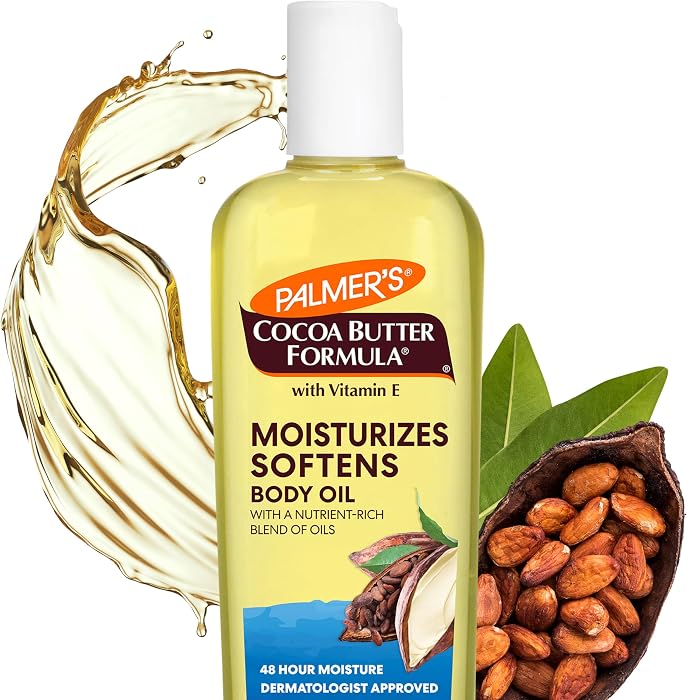
Palmer's Cocoa Butter Body Oil Best Budget Glow

Key details

Size
8.5 fl oz
Scent
Sweet cocoa
Finish
Non-greasy
Key Ingredients
Cocoa butter and vitamin E
Check Price on Amazon

The small brown bottle with the cocoa smell is probably what you picture when someone says body oil, and it is still one of the cheapest ways to get the look people actually want: legs with a bit of shine, arms that do not look ashy, a sheen across the shoulders under a summer dress. That is why it stays in our rotation even though lighter, more modern oils exist.

Vitamin E and cocoa butter carry the moisture, and the formula absorbs faster than the phrase cocoa butter suggests. This is a dry-feeling oil rather than a cream, so it sinks in and leaves a gloss instead of a film. We used it on damp skin after a shower and mostly on the parts that show. On that job it is one of the better bottles in this group, because the finish reads as a glow rather than a moisturizer.

It is not the richest thing here, either. On genuinely cracked, flaky skin the cocoa butter oil is a gloss over the problem rather than a fix, and the Johnson's gel does more for a shin that is already rough. On normal-to-dry skin, though, it is the bottle we have reached for most often, simply because it makes a visible difference in ten seconds and never feels like a project.

Pros

  • Visible glow rather than a film
  • Sinks in fast for a rich-sounding oil
  • Cocoa butter and vitamin E at a low price

Cons

  • Sweet cocoa scent divides people
Our verdict

A cheap, fast-absorbing classic that gives legs and shoulders a visible glow, provided you like smelling like cocoa butter for the next hour.

Check Latest Price
6

Yoken Organic Jojoba Oil Best Fragrance-Free

Key details

Size
16 fl oz
Scent
Fragrance-free
Formula
100% organic jojoba
Certification
USDA organic
Check Price on Amazon

The ingredient list is one word long. Yoken's jojoba is cold-pressed, USDA certified organic, and there is nothing else in the bottle: no fragrance, no added vitamin E, no carrier blend. If your skin has opinions about scented products, that single fact is most of the argument.

Jojoba is the closest thing in the plant world to the sebum your skin already makes, and it behaves like it: light, quick to sink in, and not inclined to leave a face looking like an oil slick the way a heavier body oil will. We used it on damp skin after a shower and on the face at night, and it is the bottle here that moves most easily between the two, which matters when a 16-ounce bottle of anything is a lot to keep for one job.

The trade-offs are about texture rather than performance. Jojoba is a wax ester, so it feels drier and slippier than a rich oil, and over a whole body you will use more of it than you would a formulated blend. What you get for that is a bottle big enough to use freely, on hair and nails as well as skin, without thinking about the cost per ounce. For a first pure oil, it is the least risky place to start.

Pros

  • One certified-organic ingredient
  • Fragrance-free for reactive skin
  • Light enough for face and body
  • Big bottle that invites free use

Cons

  • Takes more product to cover a whole body
Our verdict

One ingredient, no fragrance, and enough in the bottle for face, body, and scalp: the safest place to start if scented products have burned you before.

Check Latest Price
7

Handcraft Fractionated Coconut Oil Best for Mixing and Massage

Key details

Size
16 fl oz
Scent
Fragrance-free
Formula
100% fractionated coconut oil
Texture
Lightweight, non-greasy
Check Price on Amazon

This is the bottle we reach for when something else is too thick. Fractionated coconut oil has the long-chain fats removed, which keeps it liquid at room temperature and thin enough to pour, mix, and rinse out of a measuring cup, which is why it turns up in massage rooms and DIY lotion recipes as much as in bathrooms.

On its own it is a good, plain body oil: unscented, light, quick to absorb, and dry enough that it does not leave marks on clothing. It does not smell of coconut, so it will not fight a scented lotion or a perfume layered on top, and it spreads across a whole back in seconds, which is the reason it is our default for massage and for the spots a pump bottle cannot reach.

It is also the honest way to thin out a formula you already own. A glug of this mixed into a body butter that is too stiff to spread, or a cream that has gone grainy, makes both usable again without adding a scent. As a carrier oil it is also the correct way to dilute essential oils before they go anywhere near skin, which is a second job most body oils cannot do.

What it is not is a treatment. There is nothing in here for scarring, no scent to enjoy, and not enough richness for cracked shins in February, so on very dry skin you will want something heavier over the top. What it does, it does without fuss and without costing much, which is why it is the bottle we keep refilling rather than replacing.

Pros

  • Stays liquid and spreads thin
  • Fragrance-free and non-greasy
  • Covers a whole back in seconds
  • Thins a too-thick cream or butter

Cons

  • A faint smell can develop by morning
Our verdict

The bottle to keep next to a richer oil: it thins thick formulas, spreads over a whole back, and adds no scent of its own.

Check Latest Price
8

Avon Skin So Soft Bath Oil Best for Bath and Body

Key details

Size
16.9 fl oz
Scent
Classic herbal
Format
Bath and after-bath oil
Key Ingredients
Jojoba oil
Check Price on Amazon

Skin So Soft has been in bathrooms since 1961, and the smell is the whole story: green, herbal, a little powdery, unlike anything else on this list. If you grew up with it, one sniff will tell you whether the current formula matches your memory, and it does not always match, which is worth knowing before you commit to 16.9 ounces of nostalgia.

Under the scent it is a jojoba-enriched bath oil that works two ways. A capful in a warm bath softens the water and leaves your skin silkier when you stand up; used on damp skin after a shower it behaves like a normal body oil, with a non-greasy finish and a 48-hour moisturization claim on the bottle. It absorbs faster than its old-fashioned reputation suggests.

The honest framing is that it is a bath oil first. As your everyday all-over bottle, the Neutrogena does the same job with a quieter scent and better manners. What Skin So Soft does that nothing else here does is the mosquito trick: it has decades of reputation as a bug deterrent, and that is the reason a great many people buy it. Do not treat it as a substitute for a registered repellent where mosquito-borne illness is a real concern, but for a summer porch it is the bottle people reach for.

Pros

  • Two jobs: bath and after-shower
  • Jojoba-enriched with a non-greasy finish
  • Long-standing mosquito deterrent reputation
  • Absorbs faster than expected

Cons

  • Costs more per ounce than most here
Our verdict

A bath oil first and a body oil second, with a herbal scent and a mosquito reputation that have outlasted most of the products in this guide.

Check Latest Price

How We Tested the Best Body Oils

We started by scanning bestseller lists, ingredient panels, and customer reviews for body oils sold in pump, dropper, and spray bottles. I ruled out mineral-oil-heavy products that claimed to moisturize but mostly sat on the surface, products with overpowering synthetic fragrance, and anything priced so high that a daily habit felt wasteful. That left 14 oils, which we used for four months.

Every bottle lived in a bathroom cabinet and came out after showers, before bed, and on rushed weekday mornings. We applied each to damp skin and dry skin, then checked five minutes later whether the surface felt tacky, greasy, or absorbed. We noted whether a spray misted evenly or shot a stream, whether a pump delivered a controlled drop or a flood, and how thin or thick the oil felt between our palms. Rough knees, elbows, and shins got a second layer at night; in the morning we felt for softness rather than residue.

We smelled each bottle straight from the cap and flagged anything stale or rancid. Fragrance got its own check: I wore each oil on one arm during the day and asked whether the scent faded pleasantly or turned sharp, and whether it lingered on clothes. To judge scar relief and overall effectiveness, I tracked a healed scar on my shin and dry patches on my hands over several weeks, noting changes in texture and tone. We also counted pumps or sprays per use to see how far a bottle went, and compared original formulas with newer scents to find out whether the classic version was actually the better buy.

How to Choose a Body Oil

Damp Skin, Not Dry

Oil does not add water; it sits on top and slows the water you already have from escaping. That is why every bottle here performs better within a couple of minutes of a shower, while skin is still wet, than it does on dry skin an hour later. Pat once with a towel, oil, then air-dry. Applying oil to skin that is already tight and flaky is the most common reason people decide body oil does not work.

If you hate standing around waiting, let the format decide for you: a gel stays put long enough to get dressed over, a mist needs the least rubbing, and a thin oil such as fractionated coconut sinks in fastest of all.

Pick a Format You Will Actually Use

A pour bottle gives you the most oil for your money and the least control, and you will tip out more than you need for the first few weeks. A mist covers ground fast and reaches your back, but the nozzle is the most fragile part of any of these packages. A gel stays exactly where you put it, which makes it the best choice for legs, elbows, and shaving, and the worst for a whole back. On the pure oils, a pump or dropper lets you meter out drops for the face.

Match the format to the body part you usually skip, not the one you already moisturize.

Decide How Much Scent You Want

Fragrance behaves differently in an oil than in a lotion: it holds longer, because there is no water to evaporate it away. If you wear perfume, a quiet oil such as the Neutrogena sesame will not fight it, while a sweet cocoa or coconut oil will. If your skin reacts, or you simply do not want to smell like anything, the single-ingredient oils here are genuinely unscented.

Read the ingredient list rather than the front of the bottle: unscented and fragrance-free are not the same promise.

Read the Oil, Not the Word Pure

Pure tells you a bottle contains one ingredient; it does not tell you that ingredient suits your skin. Mineral oil is the cheapest, most neutral occlusive here and is well tolerated even by reactive skin, which is why it is the base of the baby oil gel. Jojoba behaves closest to skin's own sebum and moves most easily between face and body. Fractionated coconut is the thinnest, and the right carrier for diluting essential oils. Very thick single oils, the kind that pour like syrup, are hard to spread over a whole body however good they are on a scalp.

If you plan to use the oil on your chest or back, non-comedogenic is worth checking rather than assuming.

Match the Bottle to the Job

Buy small for a specific job and large for a habit. A scar or stretch mark oil is a treatment you use sparingly on one area, so a 6.7-ounce bottle is a reasonable purchase even at a premium. An everyday after-shower oil for arms and legs three times a week should be a 16-ounce bottle you never think about.

If you want one bottle for the bath, after the shower, and massage, a plain carrier oil is the cheapest route and will not clash with anything you layer over it.

Frequently Asked Questions

Final Verdict

Start with the Neutrogena light sesame oil. It absorbs faster than anything else here, it is the easiest to use well, and the scent is quiet enough that you can still wear your perfume. If there is a scar or a set of stretch marks you are actually trying to fade, the Bio-Oil is the more useful bottle and worth its smaller size.

And if your skin is dry enough to flake, skip the light oils and start with the Johnson's gel, which builds a barrier the thin ones cannot.