Best Chemical Exfoliators of 2026

Chemical exfoliators work by dissolving the glue that holds dead skin cells together, but the gap between a gentle glow and a stinging red face is smaller than you'd think. I have combination skin that reacts to everything, so I pay close attention to how a formula feels going on and what my face looks like the next morning. Over the past three months, my team and I put 14 chemical exfoliators through a full 12-week trial, using them on different skin types—including sensitive—and tracking irritation, sensitivity, and how moisturized skin felt afterward. The right one smooths texture, unclogs pores, and leaves skin soft instead of stripped.

Here's what first-time buyers don't realize: the acid type matters less than the concentration and the supporting ingredients. We compared effectiveness and exfoliation by photographing skin weekly, noted pore reduction on noses and cheeks, and judged value by cost per use and how long each bottle lasted. We also paid attention to skin feel, skin appearance, gentleness, texture, and fragrance—because a product can check every box on paper and still be a chore to use. The picks below are the ones that delivered visible results without making our testers wince.

The Best Chemical Exfoliators

1

Paula's Choice 2% BHA Exfoliant Best Overall

Key details

Size
4 fl oz
Format
Leave-on liquid
Key Acid
2% BHA (salicylic acid)
Fragrance
None added
Check Price on Amazon

Salicylic acid is the acid that gets into a pore, and 2% is a strength that does the work without stripping the surface. That's the case for this one: in a group where some picks brighten and some resurface, this is the bottle that goes after the blackheads on your nose and the congestion on your chin at the same time. Pores are where it earns its reputation; the smoothing that comes with it is why it stays in a routine.

It's a watery liquid, wet for a few seconds and then dry. We use it at night on clean, dry skin, let it settle, then follow with moisturizer, and a little covers the whole face. Don't expect a spa smell: there's no added fragrance, but the liquid itself has a faint sour note that some noses catch immediately and others never notice.

Where we're careful is the nose. The creases beside the nostrils are thin, and a nightly flood of this can leave them flaking. Keep it off the folds, use a thin layer everywhere else, and you get the benefit without the peeling. On dry skin it can also leave you feeling tight an hour later, which is a moisturizer problem rather than a reason to stop.

Against PanOxyl, our other BHA pick, this costs more ounce for ounce and buys you a formula that's been around long enough to behave predictably on most skin types. That predictability is the reason it sits first. If you've never used an acid and want the safest first step, this is the one we point to.

Pros

  • Clears congested pores and blackheads
  • Fragrance-free, fast-absorbing liquid
  • Gentle enough for nightly use on most skin

Cons

  • Costs more ounce for ounce than our other BHA
  • Can feel tight without a moisturizer
Our verdict

If you want one exfoliator that handles clogged pores and dull texture without a learning curve, this is the bottle we hand people first.
Check Latest Price
2

The Ordinary Glycolic Acid 7% Toner Best Budget

Key details

Use
Once daily, evening
Format
Liquid toner
Key Acid
7% glycolic acid (AHA)
Multi-use
Face and scalp
Check Price on Amazon

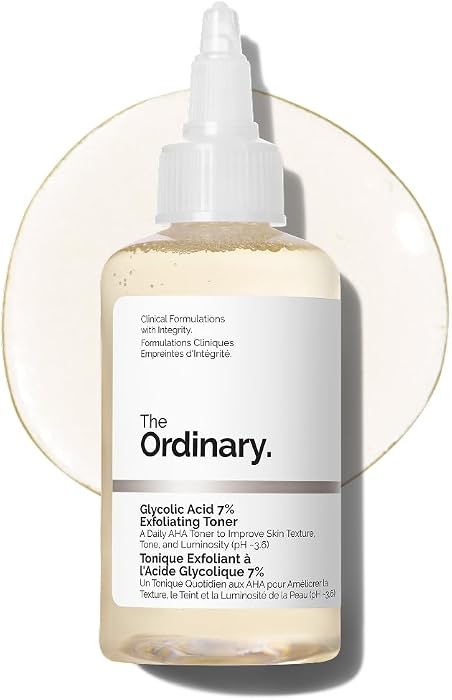
Seven percent glycolic acid is not a token amount. It's strong enough to do visible work on texture and tone, and mild enough that most people can use it nightly once their skin adjusts. The Ordinary puts it in a large bottle that costs less than almost anything else here, with aloe, ginseng, and a pepperberry extract included as an anti-irritant.

It's a proper toner in the old sense: cleanse, sweep a cotton pad across your face, move on. No wait, no rinse, no extra step to remember. Start looking for the difference at the forehead and around the nose, where texture shows first, and give it a couple of weeks of consistent evenings before you judge it.

The second life of this bottle is everything below the jaw. It's labeled for the scalp as well as the face, and it's the one here we keep reaching for on the backs of arms and underarms when texture builds up there. A bottle this size makes that affordable in a way a small serum never is.

The catch is tolerance. Glycolic is the smallest of the common AHAs, which is exactly why it works and exactly why it stings; sensitive skin will feel this one, and a compromised barrier will feel it more. Start every other night and build up. Even so, it's the bottle we hand to anyone who wants to exfoliate seriously without spending much, and the one most people will finish before they replace it.

Pros

  • Real 7% glycolic at a budget price
  • Large bottle covers face, scalp, and body
  • Smooths and brightens with steady use

Cons

  • Stings on sensitive or compromised skin
Our verdict

The bottle we tell budget-minded shoppers to start with: real 7% glycolic that smooths and brightens, and works on scalps and body patches too.

Check Latest Price
3

The Ordinary AHA 30% + BHA 2% Peel Best Weekly Treatment

Key details

Size
1 fl oz
Format
Rinse-off treatment
Key Acids
30% AHA + 2% BHA
Leave-on Time
10 minutes
Check Price on Amazon

The label on this one is unusually blunt for a skincare product: not for sensitive or broken skin, experienced acid users only, sunscreen and limited sun exposure during use and for a week after. Believe it. Thirty percent AHA with 2% BHA is a different order of intensity from anything else here, and the ten-minute rinse is a ceiling rather than a suggestion.

The name oversells the drama — nothing peels off. You paint on a thin layer, wait ten minutes, and rinse. What you get afterward is the part worth paying for: skin that's noticeably softer and brighter the same night, with a glow that a gentle daily toner takes a week to build. One strong session instead of seven quiet ones.

It tingles, and a tingle that fades is normal. Burning that builds or doesn't stop is not. Rinsing early costs you nothing, and because it's used once or twice a week at most, a small bottle lasts for months.

Who it's for: someone already using a daily acid who wants a step up, or someone who wants a visible result before an event and can plan a quiet night in. Who it isn't for: anyone whose skin stings from a mild lactic serum, or anyone tempted to leave it on past the ten minutes to get more out of it.

Pros

  • Deep resurfacing in a ten-minute rinse-off
  • Softer, brighter skin the same night
  • A bottle lasts months at weekly use

Cons

  • Not for sensitive or broken skin
  • Can burn rather than tingle on reactive skin
Our verdict

A once-a-week ten-minute treatment for people who already know how their skin handles acids, not a first exfoliator and not for sensitive skin.

Check Latest Price
4

medicube Zero Pore Pad 2.0 Best Pore Pads

Key details

Use
Swipe, then pat in
Scent
Lavender
Format
Dual-sided soaked pads
Key Acids
White willow bark BHA, citric acid
Check Price on Amazon

Each pad has two faces: an embossed side you swipe first, a silky side you follow with, then you pat whatever's left into your skin. It reads fussy and takes about thirty seconds in practice. The embossed side does light physical work alongside the acids — white willow bark, a natural BHA source, plus citric acid — which is why this feels more immediate than a plain liquid.

Pore care is the point, and it delivers there. Skin looks less greasy through the day and the pores around the nose look tighter, which is the result most oily-skin shoppers are actually after. A soaked pad also removes the dosing guesswork: no over-pouring onto a cotton pad, no liquid running down your jaw.

For oily, pore-focused skin that wants one quick step, this is the pad we reach for. What it isn't is a formula for reactive faces — the tingle is real, and it has caused breakouts and barrier trouble on skin that was already struggling. Patch test before you commit to a whole jar.

Two things to know before you buy. The solution is sticky as it dries, and if you notice a film on your face you'll notice this one. There's also a lavender scent, pleasant if you like lavender in your skincare and unnecessary if you don't.

Pros

  • Even, pre-measured dose every time
  • Textured side adds light physical exfoliation
  • Reduces shine and the look of pores

Cons

  • Leaves a sticky film as it dries
  • Lavender scent won't suit everyone
Our verdict

Best for oily, pore-focused skin: a pre-soaked pad that doses the acid evenly, with a textured side that adds a little physical help.

Check Latest Price
5

First Aid Beauty Facial Radiance Pads Best for Sensitive Skin

Key details

Size
6.4 oz
Format
Pre-soaked pads
Free From
Alcohol, fragrance, parabens
Key Acids
Lactic and glycolic acids
Check Price on Amazon

Most exfoliating pads are built for oily skin and hit accordingly. These are built for the opposite problem: lactic acid, the mildest common AHA, paired with glycolic at a level meant for daily use, and none of the things sensitive skin tends to object to — no alcohol, no added fragrance, no artificial colorants, no parabens. Non-comedogenic and dermatologist-tested, if those labels matter to you.

We like them best as a first acid, or as the way back in after something stronger went wrong. The pad controls the dose, the sweep takes seconds, and there's no liquid to over-pour on a night when you're tired. Skin comes out smoother and brighter, and makeup sits better the next morning, which is the effect most people want from an exfoliator in the first place.

They slot into a routine without drama: sweep after cleansing, follow with serum and moisturizer, and use them on alternate nights if you're also on a retinoid rather than stacking the two. That's the fastest way to over-exfoliate a face that was doing fine.

The boundary is depth. These are for surface texture, dullness, and skin that flinches at stronger acids — if your congestion is deep and stubborn, a BHA pad or a liquid will do more for you than a gentle AHA pad will.

Pros

  • Gentle enough for reactive, easily stung skin
  • No alcohol or added fragrance
  • Pre-measured pad, no over-pouring

Cons

  • Pricier than the liquid picks here
  • Faint smell despite no added fragrance
Our verdict

The pick for skin that stings easily: lactic and glycolic acids on a pad, with no alcohol or added fragrance, gentle enough for most reactive faces.

Check Latest Price
6

Good Molecules Overnight Exfoliating Treatment Best Overnight

Key details

Use
Night, up to 3x weekly
Size
1 fl oz
Format
Leave-on serum
Key Acids
AHA + BHA
Check Price on Amazon

Three nights a week, on clean dry skin, and nothing else strong in the same routine. That's the whole protocol, and the restraint is the point. This is a leave-on AHA and BHA treatment that keeps working while you sleep, so the risk isn't that it won't work — it's that you'll use it like a nightly serum and find out what over-exfoliation feels like.

Used as directed it's the most satisfying thing here for the money. Skin is smoother and more even in the morning, and the effect builds if you keep to the schedule. It's fragrance-free and thin enough to vanish under a moisturizer, which matters when you're layering at night.

It stings going on — briefly, and more on some nights than others — and that's the signal to keep the frequency where it is rather than push it. The label is specific about not layering it with other acids or retinoids, and about sunscreen the next day. Take both seriously.

This is a treatment, not a toner. It doesn't try to be used every night and it doesn't try to be the strongest thing you own, and that's exactly why it's the one we suggest to anyone who has never used an acid overnight. Start here, learn what your skin does, then decide whether you want more.

Pros

  • Smoother skin by morning, no rinse
  • Fragrance-free and layers under moisturizer
  • Least expensive route into AHA/BHA

Cons

  • Stings briefly on application
  • Night use only, three times a week at most
Our verdict

The least expensive way into a leave-on AHA/BHA: apply at night, up to three times a week, and wake up smoother without a rinse step.

Check Latest Price
7

Some By Mi 30 Days Miracle Toner Combination Skin

Key details

Size
150 ml / 5.07 fl oz
Extra
2% niacinamide
Format
Daily toner
Key Acids
AHA, BHA, PHA
Check Price on Amazon

The name is the first thing you notice, and it's worth saying plainly: thirty days is a marketing deadline rather than a clinical one. Skin turns over on its own schedule, and a toner is a slow instrument whichever acids are in it.

What the bottle actually offers is a three-acid blend — AHA, BHA, and PHA — plus 2% niacinamide, in a generous 150 ml that lasts through a normal routine. The PHA is the interesting part: it's a larger molecule that works closer to the surface, which is how a toner with three acids stays usable every day on combination skin.

We like it in the middle of a routine, after cleansing and before serum, where the niacinamide does quiet work on tone while the acids handle texture. The minty finish is genuinely refreshing in summer and a bit much in winter, and it tingles for a minute after you apply it. For combination skin that's mostly under control and wants to stay that way, this is a solid daily step.

On active breakouts that tingle turns into a sting, so it's not the bottle to reach for when your skin is already angry. Wait until things have calmed down; this is maintenance, not rescue.

Pros

  • AHA, BHA, and PHA plus 2% niacinamide
  • Refreshing minty finish
  • Generous 150 ml bottle

Cons

  • Stings on active breakouts
Our verdict

A good daily toner for combination skin that wants acids and niacinamide in one step, with a refreshing minty finish and a name worth ignoring.

Check Latest Price
8

PanOxyl 2% Salicylic Acid Exfoliant Affordable BHA

Key details

Size
4 fl oz
Format
Leave-on liquid
Formula
Alcohol-free, pH-balanced
Key Acid
2% salicylic acid
Check Price on Amazon

Same acid, same strength as our top pick: 2% salicylic acid, leave-on, alcohol-free and pH-balanced. What you give up is the years of polish — this is a plainer formula, dressed with blue algae and antioxidants rather than a full supporting cast. What you get is four ounces of the thing that does the work, and that's exactly what we want from a second bottle.

We keep it in the rotation as the one to travel with or to hand to a teenager who's going to go through it fast. It's thin, absorbs quickly, leaves nothing sticky behind, and it doesn't sting like a stronger acid does.

The trade is dryness. On skin that's already tight, this pushes it further, and reactive faces have ended up red and broken out after a few nights. If your skin runs dry, use it three nights a week instead of nightly and put a proper moisturizer on top.

One detail worth knowing: four ounces is a lot of liquid, and it's easy to be generous with a bottle this size. Resist that. A thin layer over the whole face does the job, and going back for a second pass is how a good BHA turns into a dry, flaky week.

Pros

  • Same 2% salicylic acid as our top pick
  • Alcohol-free, pH-balanced, absorbs fast
  • Large 4 fl oz bottle suits frequent use

Cons

  • Can be drying on already-dry skin
  • Has caused redness and breakouts on reactive skin
Our verdict

A plain, alcohol-free 2% BHA in a big bottle: the sensible buy when you want salicylic acid without paying for the famous name.

Check Latest Price

How We Tested 14 Chemical Exfoliators Over 12 Weeks

We started by researching more than 40 formulas across drugstore and prestige categories, then filtered by acid type (AHA, BHA, PHA, and blends), concentration, price, and formulation. We prioritized options with transparent ingredient lists and a range of strengths, eventually landing on 14 to test over 12 weeks.

Each tester patch-tested on the inner arm first, then used the exfoliator on clean skin at night, starting once a week if they had sensitive skin and increasing as tolerated. We noted stinging, redness, and flaking within the first hour, then checked skin feel and appearance the next morning—was it tight or moisturized? Over the 12 weeks, we took weekly photos under the same lighting to judge exfoliation and pore reduction on the nose and cheeks, and asked testers to rate gentleness and overall skin feel.

We also tracked how long each bottle lasted at the recommended frequency, calculating cost per use as our value measure. Texture got a plain-language note—watery, gel-like, creamy, sticky—and we recorded whether fragrance was noticeable, pleasant, or irritating. The formulas that scored highest were the ones that delivered visible exfoliation without triggering sensitivity, and felt good enough to use consistently.

How to Choose a Chemical Exfoliator

Match the Acid to the Problem

BHA, or salicylic acid, is oil-soluble, which is why it's the one that gets into a pore and shifts the plug; if blackheads and congestion are your complaint, start there. AHAs — glycolic, lactic, mandelic — work on the surface, so they're the better tool for dullness, rough texture, and uneven tone. PHAs are the largest of the common acid molecules and the gentlest, which is why you see them blended into daily toners for combination skin.

A blend is fine, but choose the lead acid by your main complaint rather than by the longest ingredient list. Our pore-focused picks are BHA-led; the sensitive-skin pick is AHA-led for a reason.

Percentage Isn't a Scoreboard

Numbers across this category don't compare. A 30% AHA in a ten-minute rinse-off peel and a 5% lactic serum used nightly are not the same exposure, and treating the bigger number as the better product is how people end up with a raw, stinging barrier. Read strength and format together.

The strongest thing here is a weekly treatment you rinse off; the daily products sit between 2% and 7%. If you want to use something every night, you're shopping for a lower number, not a higher one.

Format Decides Whether You'll Stick With It

Liquids give you the most control and the least portability: a few drops or a saturated cotton pad, then move on. Pre-soaked pads dose evenly, travel well, and remove the guesswork, which helps if you tend to over-pour. Rinse-off peels are a weekly appointment rather than a habit.

Be honest about your evenings. A bottle you never reach for is a worse buy than a jar of pads you use three times a week, and the mildest product used consistently beats a strong one that intimidates you.

Read the Tingle Correctly

A minute of tingling that fades is normal. Burning that builds, redness that lasts into the next day, or flaking in the creases beside your nose means too much, too often. Start every other night, or three nights a week with a leave-on treatment, and build from there.

Purging is real, but it stays in the areas where you normally break out. New texture everywhere else is irritation, and the answer is to back off rather than push through it.

Compare Cost by the Month, Not the Bottle

The cheapest-looking bottle isn't always the cheapest routine. A large toner used nightly can cost less per month than a small serum used three nights a week, and pre-soaked pads sit in the middle but run out on a schedule you can predict.

Work out roughly how long each will last you, then divide. That math changes fast when one product is a weekly treatment and the other is a daily step.

Frequently Asked Questions

Final Verdict

The short answer is Paula's Choice 2% BHA. It handles the two complaints that send most people looking for an acid — blocked pores and dull, uneven texture — and it's forgiving enough to use nightly while you learn what your skin will take. That combination is hard to beat, even at the top of the price range here.

If cost is the sticking point, The Ordinary's 7% glycolic toner smooths and brightens for a fraction of the outlay and doubles as a scalp and body product. If your skin stings at the first hint of an acid, start with the First Aid Beauty pads instead and build up from there.