Best Glass Skin Serums of 2026

Glass skin looks like a lighting trick but behaves like a plumbing problem: the serums behind that wet, translucent finish are mostly humectants pulling water into the top layers of skin, and when the formula stops there, the shine fades by noon and leaves a tight feeling underneath. I chased the look for years, layering essences the way a counter clerk once told me to, and the lesson held: the finish is easy, the lasting hydration is not. What you want is dew without the tacky film that grabs stray hair, in a formula calm enough to wear under sunscreen.

The label rarely tells you which one you're getting. What separates a bottle worth rebuying is how it behaves ten minutes in — whether it sinks or sits — and whether your skin still feels comfortable on day twelve. We've spent the past eight months working through 12 serums, from watery essences to thick ampoules, on bare skin, under makeup, and alongside retinol. A longer ingredient list isn't a better one, and a little goes further than the dropper suggests.

The Best Glass Skin Serums

1

Good Molecules Hyaluronic Acid Serum Best Overall

Key details

Size
1 fl oz
Texture
Lightweight water-based
Fragrance
Fragrance-free
Key Ingredient
Hyaluronic acid
Check Price on Amazon

Hyaluronic acid is the least glamorous step in a glass-skin routine and the one doing most of the work. This bottle proves the point: plain, water-based, fragrance-free, the cheapest serum here, and it leaves skin looking fuller and more light-catching than several costlier picks. That combination is why it's our default for most people.

The instruction on the label does more than it looks like it does: apply to damp skin, then seal with moisturizer. Hyaluronic acid holds water at the surface, and on dry skin it has nothing to hold. We noticed the difference straight away — two drops spread over a just-splashed face leave it looking plumped and faintly glassy, while the same amount on dry skin disappears into a fleeting tack.

The limit is worth naming: this is hydration, not correction. It won't fade a dark spot or even out patchy tone, which is a job for the niacinamide and tranexamic acid picks below, and they layer over this one happily. But if your skin is dry, dull, or simply looks tired, this is the bottle that changes the most for the least, and the thin formula means a couple of drops covers your whole face.

Pros

  • Deep hydration that layers under sunscreen and makeup
  • Fragrance-free and mild on most skin types
  • Dewy finish without a greasy film
  • Cheapest per ounce in this group

Cons

  • No brightening actives
Our verdict

For dull, dehydrated skin, this is the bottle we recommend first: deep hydration, clean layering, and a dewy finish that doesn't turn greasy by noon.

Check Latest Price
2

medicube PDRN Pink Peptide Serum Best for Glow

Key details

Texture
Silky, fast-absorbing
Skin Types
All skin types
Key Ingredients
Rose PDRN, five peptides, niacinamide, adenosine, holy basil
Check Price on Amazon

The finish is what sold us. Plenty of glow serums leave a wet film that reads as oily by lunchtime; this one sinks in and leaves skin looking lit from underneath — the bouncy, faintly pink-lit look the K-beauty shelf keeps chasing and rarely lands.

Rose PDRN, five peptides, niacinamide, adenosine, and holy basil is a lot of machinery for something this light, and the texture is why it works: silky, fast-absorbing, and weightless enough to wear under sunscreen in the morning. We found the glow arrives by the next morning rather than instantly, which feels like a fair trade for how soft skin is when you wake up.

It's one of the pricier options here, and a little goes a long way — three or four drops pressed into damp skin covers face and neck, with anything more just sitting on the surface. Layer moisturizer over it and the glow holds through a workday. If you have oily skin and want the sheen without any cushion, the Good Molecules underneath gives you most of the look for far less.

Pros

  • Dewy, lit-from-underneath finish
  • Silky texture that absorbs fast under makeup
  • Peptides and niacinamide in one step
  • A few drops cover face and neck

Cons

  • Noticeable floral fragrance
  • Can sting already-irritated skin
Our verdict

For a lit-from-within finish that still looks like skin, we choose this one — provided you're not sensitive to fragrance.

Check Latest Price
3

Anua Niacinamide 10 + TXA 4 Serum Best for Uneven Tone

Key details

Size
1.01 fl oz
Texture
Watery, lightweight
Fragrance
Fragrance-free
Key Actives
10% niacinamide, 4% tranexamic acid, 2% arbutin
Check Price on Amazon

Three brighteners in one bottle — 10% niacinamide, 4% tranexamic acid, 2% arbutin — is the most concentrated tone-evening lineup in this guide. If what stands between you and glass skin is post-acne marks, melasma, or general patchiness rather than dryness, this is where to look.

It's also the pick with the most divided feel. The formula is watery and fragrance-free, but it dries tacky, and that tack is the price of the active load. Press two or three drops in, give it a minute, then follow with moisturizer — that sequence is the difference between a sticky face and a smooth one. At 1.01 ounces it's also the most expensive per ounce here, which matters when you're using it twice a day.

Where it earns its place is over weeks rather than days: this is the one doing the slow work on dark spots while a hydrator handles the immediate dew. Start on alternate nights if your skin is reactive — three actives at once is a lot to introduce in one go — and keep it off skin that's already peeling or raw.

Pros

  • Three brighteners for tone and dark spots
  • Fragrance-free and genuinely watery
  • Sets smooth under a moisturizer
  • Gradual visible improvement on post-acne marks

Cons

  • Can sting sensitive or compromised skin
Our verdict

For post-acne marks and uneven tone, this is the most concentrated formula here, and the one we rate highest for slow, visible clearing.

Check Latest Price
4

SKIN1004 Centella Ampoule Best for Sensitive Skin

Key details

Size
3.38 fl oz
Texture
Lightweight, absorbs quickly
Key Ingredient
Madagascar centella asiatica extract
Check Price on Amazon

If every new serum turns your face red, start here. This is essentially centella asiatica extract in a light, unscented base — one calming ingredient rather than a stack of actives — and its job is to get a reactive barrier back to normal, which is the unglamorous precondition for any kind of glow.

We were struck by how thin it is. It's water-light, absorbs in seconds, and leaves no residue, so it slides under a hydrating serum and a moisturizer without pilling. When skin is already irritated, this is the layer that settles it rather than adding to the pile, which is not something we can say for most of the brightening serums on this page.

It won't give you a mirror finish on its own. Centella calms rather than brightens, so we pair it with a hydrator underneath and a niacinamide on alternate nights, and the combination does more for a glassy look than either alone. The 3.38-ounce bottle is the other argument: you can be generous with it, patting on two layers during a flare-up without watching the level drop.

Pros

  • Calms redness and irritation quickly
  • Unscented, water-light, no residue
  • Large 3.38-ounce bottle
  • Layers under anything without pilling

Cons

  • Not a brightener on its own
Our verdict

For skin that reacts to everything, this is the calming base we build the rest of the routine on.

Check Latest Price
5

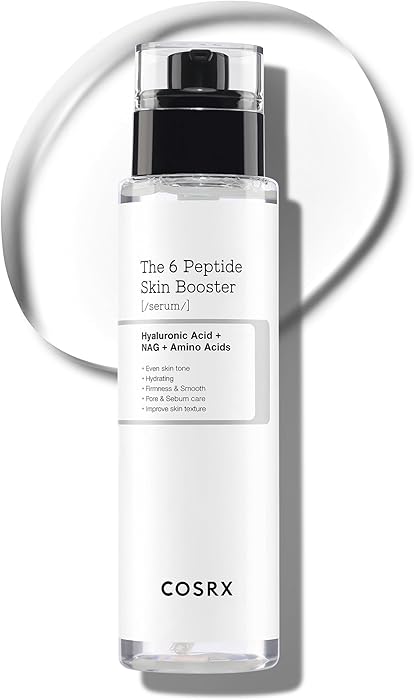
COSRX 6X Peptide Collagen Toner Serum Best Value

Key details

Size
5.07 oz
Texture
Toner-like, watery
Key Ingredients
Six peptides including copper peptides
Check Price on Amazon

It pours like water. COSRX calls this a toner serum and means it literally: the first step after cleansing, thin enough to pat in with your palms, light enough that two more layers on top won't make your face feel loaded.

Six peptides, copper peptides among them, in a 5.07-ounce pump bottle is the best value per ounce in this guide, and it's the pick doing the most quiet work. We use it as the base layer under a thicker serum, and it's the step that makes everything after it behave — makeup goes on smoother and skin looks plumper by the time the routine is finished.

The catch is that it's more toner than treatment. Peptides work gradually, the texture is watery rather than cushiony, and if you want an immediate dewy finish you still need something richer on top. Two pumps, pressed in, then your usual serum and moisturizer — that's the sequence that earned it a permanent spot in our rotation.

Pros

  • Best value per ounce here
  • Watery first step that layers under anything
  • Six peptides including copper peptides
  • Pump bottle doses precisely

Cons

  • Peptides work gradually
Our verdict

For a lightweight first step that makes every layer above it sit better, this is the best-value bottle in the guide.

Check Latest Price
6

The Ordinary Niacinamide 10% + Zinc 1% Best for Oily Skin

Key details

Size
1.06 oz
Texture
Lightweight water-based
Key Actives
10% niacinamide, 1% zinc PCA
Check Price on Amazon

Ten percent niacinamide is a lot. That concentration is why this bottle is the budget workhorse of the group and does so much for oily, congested skin — and it's also why it isn't the right first serum for everyone.

The zinc is the other half of the story. Together they cut shine, smooth rough texture, and reduce the look of pores, which is a slow effect: the brand's own testing puts visible pore refinement around four weeks of consistent use. That's a different route to a refined, glassy surface than hydration, and for skin that's slick by midday it's the more useful one.

It's a water-based serum, so it goes on light and dries down without residue, and it layers under sunscreen without pilling. Two or three drops is enough for the whole face; using more doesn't speed anything up, it just gives the zinc more surface to sit on.

For oily, blemish-prone skin chasing a smoother, less shiny surface, this is the best value in the guide. For dry or reactive skin it's the wrong tool — start with the hyaluronic pick and come back to this only if shine is the specific problem.

Pros

  • Cuts shine and refines texture
  • Layers under sunscreen without pilling
  • Budget price for a strong active load

Cons

  • Can sting sensitive or compromised skin
Our verdict

If shine and congested pores are what keep your skin from looking polished, this is the most effective cheap fix here — with a patch test first.

Check Latest Price
7

The Ordinary Hyaluronic Acid 2% + B5 Dry, Tight Skin

Key details

Size
1.06 oz
Barrier Support
Ceramides and pro-vitamin B5
Key Ingredients
Five hyaluronic acid forms, pro-vitamin B5, ceramides
Check Price on Amazon

Two hyaluronic serums in one guide needs explaining. The Good Molecules is the one we start people on; this is the one for skin that needs more than water — five forms of hyaluronic acid plus pro-vitamin B5 and ceramides, which makes it a barrier formula as much as a hydrator.

On paper that's the better-rounded hydration story. Ceramides help hold what the humectants pull in, and B5 supports the barrier, so this suits skin that's dry because it's compromised rather than simply thirsty. Used over damp skin and under a moisturizer, we found it leaves skin softer and more supple than the plain hyaluronic serum.

What the five molecular weights buy you is coverage: different sizes of hyaluronic acid sit at different depths, so the hydration reads as plumping rather than as a film sitting on the surface. It's also the only pick here with ceramides built in, which is why it suits skin that's dry and slightly raw at the same time.

Choose this over the top pick if your dryness comes with tightness and flaking and you want ceramides doing barrier work alongside the humectants. Choose the Good Molecules if you want the dewiest finish and the easiest layering under makeup. Both sit in the budget tier, so the real question is which texture you'll actually reach for twice a day.

Pros

  • Barrier support from ceramides and B5
  • Five molecular weights of hyaluronic acid
  • Leaves dry skin softer and more supple
  • Budget price for a barrier formula

Cons

  • Tacky until a moisturizer goes over it
Our verdict

For dry, tight skin that needs barrier support as much as water, this is the one we hand over — just plan to seal it with moisturizer.

Check Latest Price
8

Florence Vitamin C Serum Uneven Tone

Key details

Size
2 fl oz
Skin Types
All skin types and tones
Key Ingredients
Vitamin C, hyaluronic acid, vitamin E
Check Price on Amazon

Hydration gets you the sheen; vitamin C goes after the unevenness underneath it. This is the only vitamin C formula in the guide — a stable form with hyaluronic acid and vitamin E — and it's aimed at dark spots and dullness, which is the reason a face can be well moisturized and still not look clear.

The 2-ounce bottle is generous for the category, the texture is smooth rather than watery, and it absorbs fast enough to sit under moisturizer without a wait. There's a light citrus scent from the botanicals, which is pleasant first thing in the morning and less welcome last thing at night.

We treat it as a supporting step rather than a foundation. Add it in the morning under a hydrator and give it a couple of months before judging it — brightening is slow work, and a fortnight tells you nothing. What it does well is slot into an existing routine: no pilling, no waiting, no argument with the sunscreen on top.

Pros

  • Only vitamin C option here
  • Large 2-ounce bottle
  • Smooth texture that layers under SPF
  • Brightens dullness over time

Cons

  • Dark-spot results vary from skin to skin
Our verdict

When uneven tone and dark spots are what's dulling your skin rather than dryness, this is the brightening step we add to the routine.

Check Latest Price

How We Tested a Dozen Glass Skin Serums

We started with a long list of roughly three dozen formulas drawn from ingredient databases, dermatologist interviews, and the very loud corner of the internet that swears by a single bottle. We cut that list by reading the ingredient list first — humectants near the top, no drying alcohol in the first five slots, fragrance low or absent — then narrowed by price per ounce and texture, so we weren't pitting a watery toner-like serum against a heavy ampoule. Twelve made the cut.

Each one lived in my bathroom for at least three weeks. I applied it to damp skin straight out of the shower, timed how long it stayed wet to the touch before I could press sunscreen over it without pilling, and checked in around 3 p.m. to see whether my cheeks felt plump or tight. Because glass skin is a layering look, I also wore each serum under the same moisturizer and SPF for a week straight on one side of my face only, so the other side acted as a control.

Evenings were the harder test. On alternate nights I layered each serum over a low-strength retinol to see which ones stung, which ones flushed my cheeks pink for an hour, and which ones sat on the surface and rolled into little balls. I noted how the dropper behaved — thin formulas that ran off the fingers, gels that snapped back — and how far a bottle actually stretched, since a cheap serum you need four droppers of is not a cheap serum. The ones that stayed in rotation were the ones I stopped noticing: no sting, no film, skin still comfortable at dinner.

How to Choose a Glass Skin Serum

Start With Hydration, Then Decide What Else You Need

Almost everything in this category promises a glow; what separates the products is how they get there. Humectants such as hyaluronic acid, glycerin, and pro-vitamin B5 pull water to the surface and produce that wet, plumped look, but they only work on damp skin, and they need a moisturizer over the top to hold the water in. Applied to a dry face, the same serum can leave skin feeling tight an hour later.

So the first decision is whether your skin is dehydrated or uneven. If it's tight, dull, and fine lines look deeper by mid-afternoon, a hydrator is the whole answer. If it's comfortable but patchy and marked, you want the brightening half of this list, layered over a hydrator rather than instead of one.

Read the Finish, Not the Name

The difference between dewy and greasy is usually the dry-down rather than the ingredient list. Watery formulas disappear and leave a sheen; thicker ones with a heavier humectant load can stay tacky for a minute before they settle. Neither is inherently better, but a tacky serum under sunscreen and foundation will pill, and pilling is what ends most glow experiments.

Swatch on the back of your hand before you commit a whole routine to it: spread a drop, wait a minute, then rub a moisturizer over the top. If it balls up or stays slippery rather than setting, it will do the same on your face. Keep those formulas for night and keep a watery one for mornings under makeup.

Match the Active to the Problem

Niacinamide refines texture and cuts shine. Tranexamic acid and arbutin go after dark spots. Vitamin C brightens overall. Peptides improve firmness over time. Centella calms a reactive barrier. None of these is a glow ingredient on its own — each one changes the surface that light hits, which is why the ingredient matters less than whether it matches your actual complaint.

The trap is buying a strong brightener when the problem is dehydration, or a plain hydrator when the problem is pigmentation. Add one active at a time and give it weeks rather than days. Ten percent niacinamide isn't better than five; it's just stronger, and stronger is rarely what reactive skin needs in week one.

Fragrance, Sensitivity, and Bottle Math

Fragrance is the most common reason a glow product gets abandoned halfway down the bottle. If your skin stings easily, choose an unscented formula and patch test on the jaw for three nights before going full-face. Skin that is compromised — post-procedure, windburned, mid-flare — does better with a calming centella ampoule than with any brightener, however good the brightener is.

Then look at cost per ounce rather than cost per bottle. A watery serum used at two or three drops twice a day lasts months, so a big pump bottle of peptides can work out cheaper over a year than a small dropper of something precious. It's the least romantic part of the decision and the one you notice at the repurchase.

Frequently Asked Questions

Final Verdict

If you buy one thing from this list, make it the Good Molecules Hyaluronic Acid Serum. It hydrates as well as anything here, layers under sunscreen and makeup without pilling, and sits in the budget tier — which makes it the easiest bottle to keep using long enough to see a difference.

If uneven tone or post-acne marks are the real obstacle, swap in the Anua Niacinamide 10 + TXA 4 and accept a tackier minute before your moisturizer. And if your skin reacts to everything, start with the SKIN1004 Centella Ampoule and add a hydrator once it has settled.