Best Retinol Serums for Wrinkles of 2026

Retinol is the one ingredient in the anti-aging aisle with decades of evidence behind it — and the one most likely to leave your face red, tight, and flaking by week two. That trade-off is the whole story of buying a retinol serum: you want the version that softens fine lines and evens out tone without making you want to hide under a hat. Get it right and your skin looks smoother and calmer within a couple of months; get it wrong and you have set your moisture barrier back just as long.

I have used retinol for years and still brace myself for the first week of a new bottle, so I volunteered my easily irritated skin for the job. Over 12 weeks my team and I worked through 14 serums, and the gap between a good one and a harsh one almost never came down to the percentage printed on the front. What separates them is what the retinol is cushioned with — ceramides, glycerin, a slower delivery — and how the serum sits under the moisturizer and sunscreen you put on top. The picks below are the bottles I kept reaching for.

The Best Retinol Serums for Wrinkles

1

CeraVe Retinol Serum Best Overall

Key details

Size
1 fl oz
Fragrance
Fragrance-free
Key Support
Niacinamide, hyaluronic acid, ceramides
Retinol Form
Encapsulated retinol with MVE slow release
Check Price on Amazon

The case for CeraVe's retinol serum is simple: it gives you the wrinkle ingredient most people want in a formula that is hard to mess up. That is why it is our best overall pick. The retinol is encapsulated and paired with MVE technology, which is designed to release slowly rather than hit skin all at once. Around it are hyaluronic acid and three ceramides, so the serum has a moisturizing, barrier-friendly feel that many retinols lack.

We like that it is fragrance-free and non-comedogenic, two details that matter when you are layering a nightly active. It is not the strongest retinol here, and that is the point: for a first wrinkle serum, the slower pace is easier to live with than a straight 1% formula like The Ordinary's. The consistency is fluid enough to spread easily, and it sits well under moisturizer, which is how we prefer to use retinol. If your skin is very reactive, start twice a week; gentle does not mean inert.

What keeps it at the top is the balance. You get a proven anti-aging active, barrier support, no fragrance, and a price that leaves room for a good sunscreen. It is the bottle we recommend when someone asks for a retinol they can actually stick with long enough to see what it does for fine lines and texture.

Pros

  • Slow-release retinol is easier to start with
  • Hyaluronic acid and ceramides support the barrier
  • Fragrance-free and non-comedogenic
  • Strong value against premium picks

Cons

  • Pump can be difficult to dispense
  • Can sting very sensitive skin
Our verdict

Our best overall pick for most people starting a wrinkle-focused retinol: it pairs slow-release retinol with hyaluronic acid and ceramides, stays fragrance-free, and costs far less than the premium picks.

Check Latest Price
2

La Roche-Posay Retinol B3 Serum Best for Sensitive Skin

Key details

Texture
Lightweight, fast-absorbing
Skin Fit
Sensitive skin and beginners
Key Support
Niacinamide and hyaluronic acid
Retinol Form
Pure retinol, gradual release
Check Price on Amazon

The first thing you notice about La Roche-Posay's Retinol B3 is how little it feels like a retinol. It is lightweight and fast-absorbing, with pure retinol designed for gradual release alongside niacinamide and hyaluronic acid. The formula is free of pore-clogging oils and is positioned for sensitive skin and retinol beginners, which is a useful combination when your skin reddens easily.

We recommend it when texture is part of the decision. It layers under moisturizer without the oily film you get from a squalane-based serum, and it leaves skin feeling soft rather than tight. The niacinamide is a sensible partner for retinol because it supports the barrier while the retinol works on tone and fine lines. It is not the most dramatic strength here, so if you already use 1% retinol comfortably, this will feel polite.

For a first retinol with a lighter finish, it is the one we choose. The formula is elegant enough for a nightly routine, and the gradual-release approach makes it easier to build tolerance. It is not the bottle for someone who wants the strongest active on the shelf, but it is a thoughtful upgrade for skin that needs a gentler pace.

Pros

  • Lightweight, fast-absorbing texture
  • Gradual-release retinol with niacinamide and HA
  • Positioned for sensitive skin and beginners

Cons

  • Scented formula may bother sensitive noses
  • Premium price for a 1-ounce bottle
Our verdict

We recommend this one when you want a lightweight, gradual-release retinol and are willing to pay more for a sensitive-skin formula.

Check Latest Price
3

The Ordinary Retinol 1% Best High-Strength Value

Key details

Base
Squalane
Skin Fit
Experienced retinol users
Stated Strength
1% retinol
Check Price on Amazon

The Ordinary's Retinol 1% in Squalane is the high-strength option we point to when someone has already built a retinol tolerance and wants to spend less. The 1% concentration is the headline, and the squalane base is there to cushion the dryness that comes with a stronger active. It is explicitly for experienced users, not a first bottle.

We appreciate that it does not pretend to be a gentle starter. A few drops in the evening is enough, and the label asks you to use sunscreen during the day, avoid other retinoid products, and refrigerate the bottle after opening. That last instruction is easy to forget, but it is part of keeping the formula stable. For the strength, it is one of the best values in this group.

Where it earns its place is the combination of strength and price: you get a 1% retinol for less than most of the gentle picks here. We keep it for experienced users with dry skin, and we are careful not to layer it with other retinoids. If you are new to retinol, start with CeraVe or Minimalist and come back to this once your skin is used to the active.

Pros

  • 1% retinol for experienced users
  • Squalane helps cushion dryness
  • Low-cost high-strength option

Cons

  • Oily texture can feel slow to absorb
Our verdict

A high-strength, low-cost pick we reserve for people who already tolerate retinol and want to target texture and lines.

Check Latest Price
4

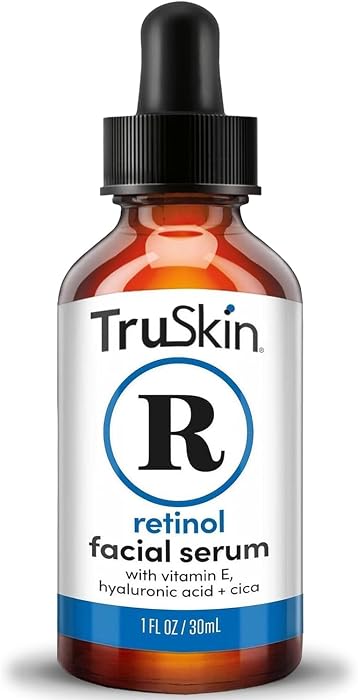
TruSkin Retinol Serum Best Soothing Formula

Key details

Size
1 fl oz
Skin Fit
Sensitive skin and beginners
Fragrance
Unscented
Key Support
Hyaluronic acid, cica, vitamin E
Check Price on Amazon

TruSkin's retinol serum is built around the ingredients people reach for when their skin is easily annoyed: hyaluronic acid for hydration, cica for soothing, and vitamin E for support. It is unscented, uses a beginner-friendly schedule of two or three applications a week, and comes in a 1-ounce bottle. The retinol is there for texture and fine lines, but the formula is clearly designed to be gentle first.

We like it for a first retinol because it does not ask you to tough out a rough adjustment period. The cica is the detail that sets it apart from the CeraVe pick; it gives the serum a calming feel that suits skin that reddens from stronger actives. It is not the most potent option here, so it is not the one for someone chasing a 1% treatment.

What we appreciate most is the value: it sits with the affordable picks, yet it includes a soothing botanical and a straightforward routine. The 1-ounce size is also easy to keep in a rotation without committing to a huge bottle. If you want a gentle, unscented retinol and you are not chasing the strongest percentage, this is an easy bottle to start with.

Pros

  • Cica and hyaluronic acid soothe and hydrate
  • Unscented and beginner-friendly
  • Good value for a 1-ounce bottle

Cons

  • Does not state its retinol percentage
Our verdict

We point first-time retinol users here when they want a soothing, unscented formula without paying premium prices.

Check Latest Price
5

Minimalist Retinol 0.3% Best Budget Starter

Key details

Base
Squalane
Fragrance
Fragrance-free
Key Support
Bakuchiol, coenzyme Q10, vitamin E
Stated Strength
0.3% retinol
Check Price on Amazon

Minimalist's Retinol 0.3% is the starter bottle we recommend when the goal is to build tolerance without spending much. The 0.3% strength is low enough to introduce retinol gradually, and the squalane base is water-free, which the brand says helps keep the retinol stable. Bakuchiol, coenzyme Q10, and vitamin E round out the formula with antioxidant support.

The label is unusually clear about how to use it: patch test first, start slowly, and do not combine it with salicylic acid, exfoliators, or other retinoids. We appreciate that kind of instruction because most retinol problems come from doing too much too soon. The squalane base is comfortable at night and gives the formula a nourishing feel, especially for dry skin.

We recommend it as the cheapest sensible entry point in this group, especially for someone who wants a fragrance-free formula and a clear low strength. It is not the bottle for someone who already uses retinol comfortably; for that, look at The Ordinary or SkinMedica. For a first step, it is hard to argue with the combination of a sensible dose, a simple routine, and a formula that does not overload the skin.

Pros

  • 0.3% retinol is a sensible starter dose
  • Squalane, bakuchiol, CoQ10, and vitamin E support skin
  • Fragrance-free and water-free

Cons

  • Squalane base can feel oily
Our verdict

This is our low-cost, low-strength starter for building retinol tolerance without fragrance or a high percentage.

Check Latest Price
6

RoC Retinol Night Capsules Best Pre-Measured Dose

Key details

Finish
Dries silky
Format
80 single-use capsules
Retinol Form
Encapsulated retinol
Check Price on Amazon

RoC's night serum capsules solve a problem most serums create: how much to use. Each capsule is sealed with encapsulated retinol and enough serum for one application, so there is no dropper to guess with and no bottle to oxidize between uses. The formula is fragrance-free and dries to a silky finish, which makes it easy to layer under moisturizer.

We like the format for travel and for anyone who has ever over-applied a liquid retinol. One capsule, one night, and the rest of the routine stays simple. The 80-count set is also easy to budget around because the number of uses is right on the package. It is a more controlled way to use retinol than a pump that can dispense too much or too little.

The trade-off is that you are paying for the packaging as much as the formula, and single-use capsules are not the most economical way to buy retinol. We still recommend them for people who value a fixed dose and a sealed, fresh-feeling product. The silky finish is a nice contrast to richer retinol creams. If you are comfortable with a dropper and want more control over the amount, a bottle is the better value.

Pros

  • Pre-measured single-use dose
  • Sealed for freshness
  • Fragrance-free and silky finish

Cons

  • Some capsules feel greasy
Our verdict

We like these capsules for anyone who wants a sealed, pre-measured retinol dose and a silky finish without a pump or dropper.

Check Latest Price
7

celimax Vita A Retinol Shot Best for Lightweight Firming

Key details

Size
1.01 fl oz
Skin Fit
Sensitive skin, dermatologist-approved
Key Support
Nine-peptide complex
Retinol Form
Pure retinol
Check Price on Amazon

celimax's Vita A Retinol Shot is built around pure retinol rather than a derivative, with a nine-peptide complex added for firmness. The brand also uses a micro-particle ingredient designed to help the actives penetrate pores, and it positions the serum as hypoallergenic and dermatologist-approved for sensitive skin. That is a lot of ambition in a lightweight bottle.

The texture is the first thing that stands out. It is lightweight and absorbs quickly, without the greasy residue that can come from a squalane-heavy serum. That makes it easy to layer under moisturizer and comfortable for daytime use if your skin tolerates retinol, though we still keep retinol in the evening routine and wear sunscreen during the day.

The peptide complex is what makes it more than a simple retinol. Peptides are there to support firmness and elasticity, and the formula is aimed at pores and texture as much as lines. We still patch test, because pure retinol is active no matter how the bottle is positioned. It is a strong alternative for someone who wants a lightweight pure-retinol formula with peptide support, not the default for a first bottle.

What we like most is the balance of firming support and a light finish. It is not the bottle we hand to every beginner, but it is a smart also-consider for someone who has used retinol before and wants a serum that feels elegant rather than medicinal. Use it two or three nights a week before building up.

Pros

  • Pure retinol with nine peptides
  • Lightweight, fast-absorbing texture
  • Dermatologist-approved for sensitive skin

Cons

  • Can sting sensitive skin despite gentle positioning
Our verdict

We see this as a lightweight pure-retinol option for shoppers who want peptide support and are willing to patch test first.

Check Latest Price
8

SkinMedica Retinol 1.0 Best for High-Potency Use

Key details

Size
1 fl oz
Skin Fit
Experienced retinol users
Key Support
Encapsulated PhytoShield Complex
Stated Strength
1.0 retinol complex
Check Price on Amazon

SkinMedica's Retinol 1.0 Complex is the high-potency option in this group, and it is priced like a specialty product. The formula uses vitamin A derivatives alongside an encapsulated PhytoShield Complex, an antioxidant blend designed to support skin texture while minimizing irritation. It is made for evening use, with a gradual build-up and daily SPF.

We reserve it for someone who has already used retinol and knows how their skin responds. The 1.0 strength is not a starter dose, and the formula does not pretend otherwise. If you are still learning to tolerate retinol, the CeraVe or Minimalist picks are the smarter first step; this one is for the person who wants a more aggressive active and is willing to go slowly.

The texture is lighter than the strength suggests. It feels more like a light lotion than a heavy night cream, so it layers under moisturizer without a greasy residue. That is a pleasant surprise for a premium retinol, because strong formulas often feel thick or tacky. The bottle is simple, and the formula is easy to spread evenly.

What we like most is the balance of potency and elegance: it feels refined enough for a nightly routine, but it does not hide its strength. We recommend it for experienced retinol users who want a premium, antioxidant-rich formula and will introduce it slowly. For everyone else, the gentler picks here are the better buy.

Pros

  • 1.0 retinol complex for experienced users
  • Encapsulated PhytoShield antioxidants
  • Improves tone and texture

Cons

  • Premium price for a 1-ounce bottle
  • High strength can cause peeling or redness
Our verdict

This is the high-potency pick we keep for experienced retinol users who want a premium, antioxidant-rich formula and will introduce it slowly.

Check Latest Price

How We Tested the Best Retinol Serums for Wrinkles

We started with a list of 40 serums pulled from ingredient panels and retailer reviews, then cut it down by three things: whether the retinol was cushioned with barrier-friendly ingredients, the price per ounce, and whether the texture worked for oily skin as well as dry. Formulas that leaned on alcohol or a high dose with nothing to soften it did not make the cut. That left 14, which testers with oily, dry, sensitive, and acne-prone skin used for 12 weeks.

Everyone patch-tested on the jawline for five nights before going anywhere near the rest of the face, which is where we caught the formulas that stung on contact. From there, testers moved to every other night, then nightly, keeping notes on redness, flaking around the nose and mouth, and whether they needed a heavier moisturizer on top. We applied each serum in the same order — after cleansing, before moisturizer — timed how long it took to stop feeling tacky, and checked at 2 p.m. for shine across the forehead and whether makeup had pilled.

Every two weeks we took photos in the same bathroom light to compare fine lines at the outer corners of the eyes and tone along the cheeks. The most effective serums were not the strongest; they were the ones testers could still use nightly by week six without a reaction, which is where the smoothing actually happens. We also counted how many drops a full-face application took to work out what each bottle really cost per month, because a serum you ration is a serum you never finish.

We are still using three of them daily and will keep watching the longer-term results, but the pattern held from the first month: the formulas that felt unremarkable going on were the ones that produced the changes in the mirror.

How to Choose a Retinol Serum for Wrinkles

Start With Delivery, Not Just Percentage

A 1% retinol sounds impressive, but the formula around it decides how much reaches your skin and how much irritation you feel. Encapsulated and gradual-release retinols, like the CeraVe and La Roche-Posay picks, are designed to release more slowly; they are the safer starting point for most people. A straight 1% in squalane, like The Ordinary's, is better for someone who already knows their skin tolerates retinol. If the label gives no percentage, judge the product by its positioning: beginner, sensitive-skin, or experienced-user.

Look for Barrier Support

Retinol works by speeding up skin turnover, which can leave skin dry or tight. Hyaluronic acid, niacinamide, ceramides, squalane, and cica are the ingredients we look for to cushion that effect. They do not cancel the retinol; they make it easier to keep using. Fragrance-free formulas are also worth prioritizing if your skin reddens easily, though fragrance-free does not guarantee zero irritation. We like CeraVe's ceramide-and-hyaluronic-acid combination for a first bottle, and TruSkin's cica-and-hyaluronic-acid formula when soothing is the main goal.

Match the Texture to Your Routine

Texture is not cosmetic. A lightweight serum like La Roche-Posay's layers easily under moisturizer and suits oily or combination skin. A squalane-based formula like The Ordinary's or Minimalist's feels richer and can be a better fit for dry skin, but it may take longer to settle. If you hate the feel of an oil, do not buy a squalane serum and hope it will dry down. Capsules like RoC's give a silky, pre-measured dose and are easy to travel with, though they are a fixed-format purchase.

Build a Tolerance Plan

Start with two or three nights a week, using a pea-sized amount for the whole face. Add a moisturizer on top, and keep the rest of your routine boring: no exfoliating acids or other retinoids on the same night until you know how your skin responds. Sunscreen is non-negotiable, because retinol can make skin more sun-sensitive. If you sting or peel, back off rather than pushing through. The goal is a routine you can keep for months, not a dramatic first week.

Frequently Asked Questions

Final Verdict

For most people, the CeraVe Retinol Serum is the one to start with: it pairs slow-release retinol with hyaluronic acid and ceramides, skips fragrance, and leaves room in the budget for sunscreen. If your skin is reactive and you want a lighter texture, La Roche-Posay's Retinol B3 is the upgrade; if you already tolerate retinol and want a stronger, cheaper active, The Ordinary's 1% is the next step.