Best Serums for Acne Scars of 2026

Acne scars don't fade on your schedule, and no single ingredient does the whole job — what works is a formula that turns over cells, supports collagen, and stays gentle enough that you'll actually keep using it. I once pushed an acid serum too hard and ended up with cheeks redder than the scars I was trying to blur. A good serum fixes the part you can control: it makes that daily step steady instead of a gamble.

Over the past six months, my team and I worked through 12 serums on real post-acne marks — mine along my jawline, a colleague's across both cheeks — and the differences showed up fast. The keepers hydrated enough that moisturizer felt optional on a humid morning, sank in without leaving a film, and never made anyone flinch on contact. Price barely predicted performance; texture and tolerability did. Below are the ones worth the shelf space, grouped by what your skin is asking for.

The Best Serums for Acne Scars

1

CeraVe Resurfacing Retinol Serum Best Overall

Key details

Size
1 fl oz
Ceramides
3 essential ceramides
Fragrance
Fragrance-free
Key Actives
Encapsulated retinol, niacinamide, licorice root
Check Price on Amazon

The best default for post-acne marks is the one that treats two problems at once: the flat brown stain a breakout leaves behind, and the rough, open-pored texture around it. CeraVe's resurfacing serum is that one. Encapsulated retinol does the resurfacing, niacinamide and licorice root go after the color, and the three ceramides the brand builds into everything keep the barrier from unraveling in the process. That combination is why it sits at the top of this list.

Retinol is the engine, and it's the ingredient most likely to make a real difference to marks that have been sitting there for months. Encapsulation is what makes a drugstore bottle reasonable for someone who has never used a retinoid: it meters the dose out rather than delivering it all at once. The texture is light and milky, it disappears quickly enough to follow with moisturizer straight away, and there's nothing added in the way of fragrance.

Where it pulls ahead of the brightening-only serums here is on marks that come with texture. A stubborn spot on the cheek often leaves both a shadow and a shallow dent in the surface, and niacinamide on its own won't touch the second one. This is also the most forgiving way to add a retinoid to a routine that already has a moisturizer and a sunscreen in it — one step, not five.

Two things to accept before you start. Retinol is a months-long project, and it does nothing to protect the result from the sun that created the mark in the first place, so daily SPF isn't optional. And an ounce used twice a week on face and neck lasts a good while, which makes the price easier to justify than the bottle size suggests.

Pros

  • Fades marks and refines texture in one step
  • Ceramides buffer the retinol
  • Fragrance-free and non-comedogenic

Cons

  • Can cause redness and flaking while skin adjusts
Our verdict

Our top pick: encapsulated retinol and niacinamide fade post-acne marks and smooth texture at once, with ceramides keeping the barrier intact.

Check Latest Price
2

Anua Azelaic Acid 10 Serum Best for Redness-Prone Skin

Key details

Size
1.01 fl oz
Texture
Lightweight, watery
Key Actives
10% azelaic acid, hyaluronic acid, panthenol
Non-comedogenic
Clinically tested
Check Price on Amazon

A mark that stays red is a different problem from a mark that turns brown, and most serums treat only the second one. Azelaic acid handles both, which is why this 10% formula from Anua earns a place here. It's paired with three weights of hyaluronic acid and panthenol so it hydrates while it works, plus cica and blue tansy oil, and the formula carries a naturally derived green tint that takes the edge off flushing the moment it goes on.

We reach for this when the skin around the mark is still reactive — warm, easily flushed, prone to stinging the moment a strong active lands on it. Azelaic acid calms that redness while it fades pigment, and it doesn't bring the flaking and peeling a retinoid can. For anyone who has abandoned a retinol because their cheeks burned, this is the more realistic place to start.

Dosing is gentler than the ingredient list suggests: a drop or two, once or twice a week to begin with, building up rather than going straight to twice daily. The texture is thin and watery going on, though it can dry down with a slight sheen that some skin types notice more than others. It's also clinically tested as non-comedogenic, which matters when you're layering it over skin that still clogs easily.

Pros

  • Calms redness while it fades marks
  • Azelaic acid at a serious 10%
  • Hydrating, clinically tested non-comedogenic base

Cons

  • Works on color and redness rather than pitted texture
Our verdict

For marks that flush red and skin that reacts to everything, azelaic acid at 10% fades pigment and calms redness without the flaking a retinoid brings.

Check Latest Price
3

Anua Niacinamide 10 + TXA 4 Serum Best for Uneven Tone

Key details

Size
1.01 fl oz
Fragrance
Fragrance-free
Key Actives
10% niacinamide, 4% tranexamic acid, 2% arbutin
Also Contains
Ceramides, hyaluronic acid
Check Price on Amazon

Three brightening actives share one bottle here: 10% niacinamide, 4% tranexamic acid and 2% arbutin. Each works on pigmentation by a slightly different route, which is the argument for a combination like this over a single-ingredient serum. Ceramides and hyaluronic acid keep it from feeling like a pure treatment, and the formula is fragrance-free with no added color.

It's the pick for discoloration spread across a whole area — the patchy, sun-and-acne mix that covers cheeks, temples and forehead rather than one or two distinct spots. The brand also suggests carrying it down the neck and onto the body, and the watery texture makes that easy without using up half the bottle in a week.

Our reservation is the finish. It goes on like water and then dries with a tacky grab you'll feel until moisturizer goes over the top, and that's the difference between a serum you use twice a day and one you save for nights. Give it two months and the evenness shows up as a general clearing rather than one mark disappearing — which is what you want when the problem is a whole cheek.

Pros

  • Three brightening actives in one formula
  • Ceramides and hyaluronic acid soften the formula
  • Fragrance-free with no added color

Cons

  • Costs more than the plain niacinamide serums here
Our verdict

Three brightening actives in one watery bottle make this our pick for broad, patchy discoloration, as long as you don't mind a tacky finish.

Check Latest Price
4

The Ordinary Niacinamide 10% + Zinc 1% Best Budget

Key details

Format
Water-based serum
Application
Morning and evening
Key Actives
10% niacinamide, 1% zinc PCA
Check Price on Amazon

The least expensive serum in this lineup is also the one we recommend most often to someone starting from scratch. Ten percent niacinamide with 1% zinc PCA is a straightforward combination: the niacinamide works on tone and texture, the zinc helps with the oiliness that keeps producing new blemishes. It's water-based, absorbs in seconds, and layers under anything without pilling.

Patch test it on the jaw before you commit, and start with a couple of drops rather than a full dropper — this is a formula that rewards restraint. Where it shines is oily, congested skin, the kind where marks arrive with shine and visible pores, and where a light layer under moisturizer is all you want in the morning. Two drops covers a face, so a small dropper bottle runs longer than it looks.

Pros

  • Lowest price in this lineup
  • Controls oil while it works on tone
  • Water-light and layers under anything

Cons

  • Can sting dry or sensitive skin at 10%
Our verdict

The cheapest serum here is still one of the most convincing for oily, blemish-prone skin — patch test it, because 10% niacinamide plus zinc isn't gentle on everyone.

Check Latest Price
5

TruSkin Vitamin C+ Serum Best Vitamin C Pick

Key details

Use
2-3 nights a week to start
Size
1 fl oz
Key Actives
Vitamin C, retinol, niacinamide, hyaluronic acid, squalane
Check Price on Amazon

Where the CeraVe pick pairs retinol with niacinamide, this one pairs it with vitamin C — plus niacinamide, hyaluronic acid and squalane — for a five-in-one aimed at the same marks from the brightening end. The vitamin C handles dullness and dark spots, the retinol supports surface renewal, and the squalane keeps the whole thing from feeling tight on the way in.

Of everything here, this is the one that goes after the overall dullness sitting on top of individual marks. If your face reads tired and uneven rather than spotty, vitamin C does work niacinamide alone doesn't, and having it in the same bottle as the retinol means one step at night instead of two. The instructions are sensible: two or three nights a week to start, building as your skin allows.

The scent is the other thing to know about. This is a fragranced formula with a distinct citrus note, which plenty of people love and some routines don't want at all. Our advice is to start at two nights a week, keep a plain moisturizer nearby while your skin adjusts to the retinol, and give it a month before judging the brightness.

Pros

  • Vitamin C plus retinol for brightness and renewal
  • Hyaluronic acid and squalane keep it comfortable
  • Targets overall dullness, not just single marks

Cons

  • Stacked actives can sting sensitive skin
Our verdict

Vitamin C and retinol in the same bottle make this the brightest option here for dull, sun-aggravated marks, though reactive skin should be wary.

Check Latest Price
6

SKIN1004 Tone Balancing Ampoule Best Value per Bottle

Key details

Size
3.38 fl oz / 100 ml
Texture
Lightweight capsule ampoule
Key Actives
Niacinamide, tranexamic acid, centella
Check Price on Amazon

Most serums in this guide arrive in a one-ounce bottle. This one is 3.38 fl oz — 100 ml — and that changes how you use it. There's enough to take it down your neck and across your chest, where post-acne marks tend to be ignored because a small bottle feels too precious to spend there.

Inside it's niacinamide and tranexamic acid for tone, with centella to keep things calm, and the MadeWhite capsules break down as you press it in. The texture is light, absorbs quickly enough to follow with moisturizer, and it's fragrance-free.

We like it most as the workhorse: the bottle you can use generously twice a day without doing arithmetic. It's also the gentlest of the brightening options here, which makes it a reasonable first step for someone nervous about acids. The trade is a slightly tacky layer before it dries, so give it a minute before moisturizer goes on.

Pros

  • 100 ml bottle lasts far longer than a standard serum
  • Niacinamide and tranexamic acid for tone
  • Centella keeps it soothing

Cons

  • Brightening is gradual and general rather than spot-targeted
Our verdict

You get 100 ml of niacinamide, tranexamic acid and centella for about what the one-ounce bottles cost, which makes it the pick for face, neck and chest.

Check Latest Price
7

COSRX Snail Mucin 96% Serum Post-Acne Dryness

Key details

Size
3.38 oz
Format
Lightweight essence
Key Ingredient
96.3% snail secretion filtrate
Check Price on Amazon

This one will not fade a brown mark, and it's worth saying plainly, because the word serum on the bottle invites the assumption. What COSRX's 96.3% snail secretion filtrate does is hydrate and soothe — the repair layer, not the treatment.

The case for it is the barrier. Retinol and exfoliating acids leave skin tight and flaky while they work, and this puts moisture back without adding another active to the pile. At 3.38 ounces it's generous enough to use morning and night, and it settles in under a moisturizer without much fuss.

Slot it in where it helps most: under a retinoid at night, or on its own in the morning when your skin is still recovering from a bad stretch. What we noticed over weeks of use is that the tightness following a retinoid is easier to live with when this goes on first.

For dry, tight, flaky post-acne skin, this is a better use of money than a third brightening serum — it's what makes the actives tolerable in the first place. Oily, easily clogged skin is the exception, and it's the one pick here most likely to feel like too much.

Pros

  • 96.3% snail secretion filtrate for hydration and repair
  • Large 3.38 oz bottle
  • Layers under a retinoid without adding an active

Cons

  • Sticky until it dries
Our verdict

It won't fade a mark on its own, but this is the layer we reach for when post-acne skin is tight, flaky and angry — 96.3% snail mucin does that job well.

Check Latest Price
8

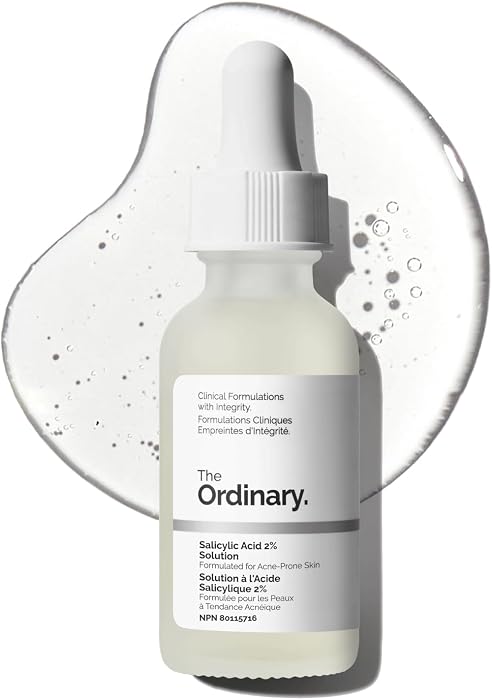
The Ordinary Salicylic Acid 2% Best for Active Breakouts

Key details

Format
Oil-soluble solution
Key Active
2% salicylic acid
Application
Thin layer 1-3 times daily
Check Price on Amazon

If you're still getting new breakouts every week, the mark-fading conversation is premature — every fresh spot lays down another mark while you're busy fading the last one. That's the case for 2% salicylic acid, and it's why we keep this bottle alongside the brightening serums rather than in place of them.

Salicylic acid is oil-soluble, and that's the property that matters: it gets into the pore lining where congestion starts rather than sitting on the surface. The Ordinary's version is a thin, watery solution applied as a layer, and it's the budget-friendly way to keep pores clear in this lineup.

It is not a scar treatment and it won't lighten what's already there. What it does is reduce the severity of active acne and let skin heal, which is the difference between a face that's finishing the job and one that keeps restarting it.

The pairing matters more than the frequency. Once a day is enough for most skin, and the payoff comes when a brightening serum takes over the fading while this one keeps new congestion from forming. For anyone whose marks are still arriving weekly, this is the first bottle to buy, not the last.

Pros

  • Clears the congestion that creates new marks
  • Oil-soluble formula reaches inside pores
  • Budget-friendly addition to a fading routine

Cons

  • Can dry or sting when used beyond skin's tolerance
Our verdict

Buy it while you're still breaking out: 2% salicylic acid clears the congestion that keeps laying down new marks, and does little for the ones you have.

Check Latest Price

What Six Months and 12 Serums Taught Us

We started with roughly 40 serums sold for post-acne marks, pulled from dermatologist recommendations, ingredient databases, and the review sections of brands people repurchase. Anything listing fragrance or denatured alcohol in the first five ingredients got cut, as did formulas whose own reviews kept mentioning pilling under sunscreen, and anything charging prescription money for a weak percentage of the active. Twelve made the final list.

Each of the 12 went to two testers from a rotating panel whose skin behaved differently — one oily and clog-prone, one dry and easily flushed. Testers applied it at the label's direction, morning or night, and kept a shared photo log: same bathroom light, same angle, same Friday. We also had them note the four-hour mark, when a serum either keeps skin comfortable or leaves it tight, and record every sting, every flush, and any morning they woke up to a new breakout.

What separated the winners was rarely the headline ingredient. It was whether the bottle still had serum in it at week five, whether foundation and SPF went on over it without rolling into pills, and whether testers reached for moisturizer out of habit or need. We checked texture by mid-morning — did it sink in or sit on top of the skin? — and compared the weekly photos side by side at the end, asking one blunt question: do the marks look any less distinct, and would you buy this again with your own money?

How to Choose a Serum for Acne Scars

Know Which Mark You're Treating

Post-acne marks fall into two groups, and they don't respond to the same ingredients. Brown marks are pigment left behind after a spot heals, and they respond to brighteners: niacinamide, tranexamic acid, vitamin C, azelaic acid, licorice root. Red or pink marks are dilated blood vessels under the skin, which is why azelaic acid and soothing centella do more for them than a brightening serum does.

There's a quick test. Press a fingertip on the mark: a brown one won't change, while a red one blanches and refills. Indented scars are a third problem entirely, and nothing in this guide fills them — that's a conversation with a dermatologist, not a serum.

Choose an Active You Can Live With

Retinol is the strongest resurfacing option here and the one most likely to irritate, so it suits someone willing to build up slowly and wear sunscreen without being reminded. Azelaic acid is the gentler route: it works on redness and pigment at once and is the better entry point for skin that stings easily. Niacinamide sits in the middle — usable daily from day one for most people, though a 10% formula is strong enough to set off dry or reactive skin.

Pick one, and don't stack it on top of the exfoliating acid you already own. Layering two resurfacing actives is how people end up with a raw face and no result.

Texture Decides Whether You Finish the Bottle

The most common complaint in this category isn't results, it's finish. Several formulas go on like water and then dry tacky, which is fine at night and irritating under makeup first thing. If you'll wear it during the day, choose a thin, fast-absorbing formula; if it's a night-only step, a tackier one costs you nothing because moisturizer goes over it anyway.

A serum you avoid reaching for is worth nothing, however good the ingredient list looks on paper.

Read the Bottle Size, Not Just the Percentage

Ten percent niacinamide is not a ranking. Two formulas can carry the same percentage and behave completely differently depending on what sits around them — one stings, one glides. What does change the math is volume: a one-ounce bottle goes quickly with twice-daily use on face and neck, while a 100 ml ampoule treats the same area for far longer and makes generous application realistic.

If you're covering more than your face, size matters more than strength.

Sunscreen Is Part of the Treatment

Every active in this guide is working against the sun. UV exposure darkens existing marks and creates new ones, and retinol leaves skin more sun-sensitive while you adjust to it, so a broad-spectrum sunscreen every morning isn't a separate step — it's the thing that lets the serum's work show up at all.

Reapply if you're outside for long stretches, and in summer treat a hat as part of the routine rather than an accessory.

Frequently Asked Questions

Final Verdict

For most people with flat brown post-acne marks and a bit of texture around them, the CeraVe Resurfacing Retinol Serum is where the money goes: it works on color and surface at once, and the ceramides make a retinoid tolerable for skin that has never met one.

If your skin flushes red or stings at the first hint of a retinoid, start with the Anua Azelaic Acid 10 instead and give it two months. And if you're still breaking out every week, treat that first — The Ordinary Salicylic Acid 2% keeps the next round of marks from forming while the others fade the current one.