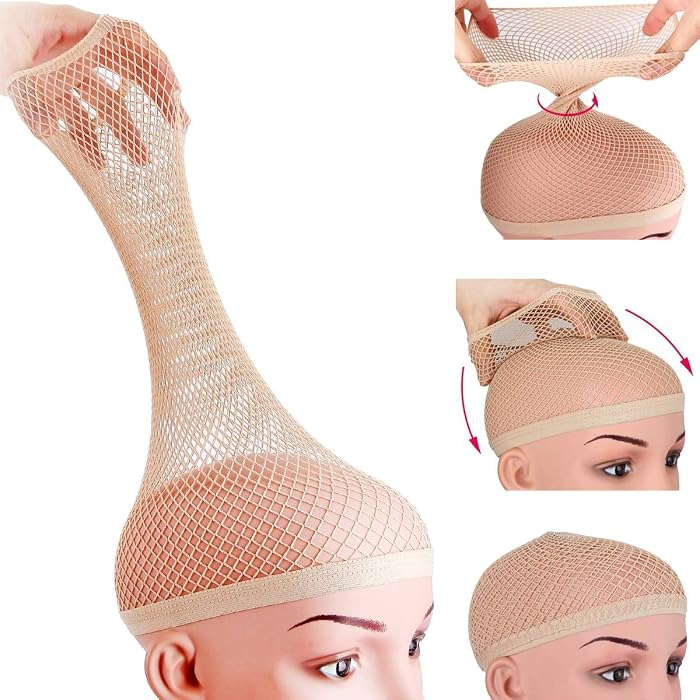
To build our shortlist, we started with research—reading customer reviews and scanning specs for materials, size ranges, and color options. We filtered out caps with obvious red flags like scratchy seams or no size guidance, then ordered 14 styles that ranged from basic mesh to stretchier velvet-band options. We made sure the group included multiple sizes and a wide spread of colors, since a cap that only comes in one shade can show at your hairline.
For four months, each cap went into rotation. We wore them under wigs for full 10-hour workdays, through 30-minute cardio sessions, and during evenings out—dinners. We noted whether the edge rolled up when we bent over, if seams left marks on our foreheads, how hot our scalps felt by hour eight, and whether we had to readjust after hugging or dancing. To test grip, we shook our heads side to side and bent forward at the waist; caps that shifted or slid back were flagged immediately. Fit and size got checked against different head circumferences and shapes, looking for bands that dug in or fabric that bunched at the crown.
Thinness and appearance got their own checks. We held each cap up to a window to see how much light came through, then wore it under a lace-front wig to see if the pattern or edge showed through. Color matching happened in natural daylight and harsh bathroom bulbs, against different skin tones. We hand-washed every cap after each wear and air-dried them, tracking seams that frayed and elastic that went slack after 10 washes. Value came down to price per wear: a cap that stretched out after three washes ranked lower than one that held its shape for months. Functionality was simple—did the cap hold our hair flat, and did it stay put without clips or glue?