Best Toner for Face of 2026

Toners have a reputation problem: somewhere along the way they became the step that leaves your face tight, stinging, and vaguely regretful. The good ones do the opposite — they lift the last of the cleanser, put back some of the moisture that washing takes out, and leave skin calm enough for whatever serum comes next. The bad ones strip you dry or light you up with fragrance, and the difference usually isn't price.

I've been washing my face twice a day for a long time, and I still notice the second a toner leaves my cheeks hot. Over four months we put 14 toners on real faces — mine, my team's, and two volunteers with genuinely reactive skin — and the pattern held: the ones that actually smoothed and clarified were also the ones that didn't sting. A cheap bottle beat several splurge ones, and the calmest finishes lasted well past the ten-minute mark. Here's what earned a permanent spot on the shelf.

The Best Toner for Face

1

Thayers Unscented Witch Hazel Toner Best Overall

Key details

Size
12 fl oz
Scent
Unscented
Alcohol
Alcohol-free formula
Key Ingredients
Witch hazel and aloe vera
Check Price on Amazon

Ask us to name one toner before you tell us your skin type, and this is the bottle that comes up. Thayers is alcohol-free witch hazel cut with aloe, and it does the plain work a toner is supposed to do: lift whatever the cleanser left behind, settle the skin, and leave it comfortable rather than tight. It balances rather than treats, which is exactly why it suits so many faces.

The detail that changed our mind about witch hazel is how this one is made. The plant is macerated in water rather than distilled with alcohol, so the sharp, drying edge people remember from older astringents is not there. On a cotton pad it is thin as water and takes the last of a makeup day with it; pressed in with palms it disappears under serum in seconds. It also earns a second life as an aftershave or a swipe down the back of the neck, which is more than most toners manage.

Its home is the middle of the road: skin that feels filmy or faintly tight after cleansing, normal-to-slightly-oily complexions, and anyone whose face flinches at acids. If dryness is the main event, a milky formula such as BYOMA leaves far more behind, and that is a different job rather than a fault. On the nights our skin is recovering from something else in the routine, this is the step we keep.

Take the unscented version. Fragrance is the one thing you can add later and cannot take out, and this formula does not need it. Ours lives within reach of the sink and gets replaced before it runs out, which is the most honest compliment we can pay a toner.

Pros

  • Alcohol-free witch hazel that does not strip
  • Unscented version suits reactive skin
  • Doubles as an aftershave or body swipe
  • Twelve ounces goes a long way

Cons

  • No exfoliating or treatment actives
Our verdict

Our pick for most people: an unscented, alcohol-free witch hazel toner that balances and comforts almost any skin type without a single treatment active in the formula.
Check Latest Price
2

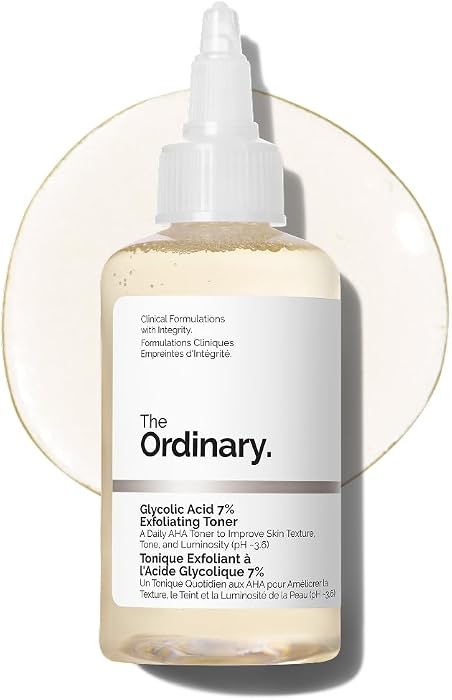
The Ordinary Glycolic Acid 7% Toner Best for Texture and Dullness

Key details

Directions
Once daily, in the evening
Extra Uses
Scalp and body
Key Active
7% glycolic acid
Also Contains
Tasmanian pepperberry, aloe, ginseng
Check Price on Amazon

Seven percent is the number that decides whether this belongs on your shelf. At that strength glycolic acid is doing real work, loosening the dead cells that make skin look flat and feel rough, and it is why this bottle produced the most visible change in texture of anything here. It is also why we treat it as a treatment rather than a swipe-and-go step.

Used at night, a few times a week to begin with, it delivered what the label promises: smoother cheeks, a brighter overall look, and less of the dullness that shows up in photographs before it shows up in a mirror. Next to La Roche-Posay's Effaclar, which pairs a little glycolic with salicylic for pore maintenance, this is the blunter instrument — one acid, higher dose, more resurfacing. For dullness and rough texture that is what we want, and it is why this sits at the top of the group for both.

Use it the way the label says, once and in the evening, and build up slowly: a patch on the jaw first, then every third night, then more often if your skin stays quiet. Sunscreen the next morning is not optional once an acid is in the routine, and neither is keeping it off your eyelids, your lips, and any skin that is already broken.

The extra uses are what made it a permanent fixture for us. A pass over the scalp before shampooing cuts product buildup, and the same bottle goes on rough patches elsewhere, arms and heels included, where the acid does the same job. One bottle covers face and beyond, and nothing else here works as hard for the effort.

Pros

  • 7% glycolic visibly smooths texture
  • Brightens dull, uneven tone
  • Works on scalp and body too

Cons

  • Can sting skin that is already irritated
  • Once-daily, evening-only use
Our verdict

The best exfoliating toner here: 7% glycolic acid smooths rough texture and lifts dullness, as long as you start slowly and wear sunscreen daily.

Check Latest Price
3

BYOMA Milky Toner Best for Dry, Sensitive Skin

Key details

Formula
Milky ceramide toner
Free From
Alcohol and fragrance
Skin Types
All, including sensitive
Key Actives
Polyglutamic acid and cica
Check Price on Amazon

Skin that feels tight five minutes after washing is the problem this fixes, and it fixes it better than any other hydrating toner here. The ceramides sit in an oil-based lipid complex rather than a watery base, which is why the texture reads as creamy and why it leaves a soft, cushioned layer instead of evaporating. Polyglutamic acid and cica handle the water-holding and the calming, and there is no alcohol or fragrance in the formula.

It goes on like a light lotion and sinks in faster than that suggests. We could follow it straight with serum and moisturizer without waiting, and it sat under makeup without pilling or rolling. On sensitized skin, the kind that stings at everything, this is the bottle we trust most in this group, and the finish is dewy rather than greasy, which matters at eight in the morning.

The milkiness is the thing to test: oily skin in a humid summer may find it heavier than it wants, and it will not do anything about shine. Where it earns its place is winter, post-retinol nights, and any stretch when skin is reacting to everything else. It is the bottle we keep for the weeks when the actives have to come out of the routine.

Pros

  • Ceramide and lipid complex supports the barrier
  • No alcohol and no fragrance
  • Milky texture absorbs without stickiness
  • Sits well under makeup

Cons

  • No clarifying or exfoliating actives
Our verdict

The most impressive hydrating toner in this group: a ceramide-rich milk that settles tight, reactive skin and layers cleanly under makeup.

Check Latest Price
4

CeraVe Hydrating Toner Best Budget Hydrating Toner

Key details

pH
pH balanced
Size
6.8 fl oz
Fragrance
Fragrance-free
Key Ingredients
Hyaluronic acid, niacinamide, ceramides
Check Price on Amazon

CeraVe's toner is the least dramatic bottle here, and that is the pitch: hyaluronic acid, niacinamide, and the brand's three ceramides in a pH-balanced, fragrance-free liquid that behaves like slightly thickened water. Nothing in it tightens, tingles, or strips. It adds a layer of moisture and leaves skin ready for whatever comes next.

On reactive skin it was the quietest of the group, with no sting, no flush, and no scent to object to, and it is the one we point to for faces that react to fragrance or essential oils. There is one wrinkle in the dry-down: it finishes with a faint tacky pull if you stop there, so give it a beat or go straight into moisturizer and the stickiness never shows up.

Where it wins is tolerance at a budget price. It is the fragrance-free option we hand to someone whose skin has rejected three other toners, and it layers under anything without a fight. Choose it over BYOMA if your skin is oily but sensitive, and over Thayers if what you want is moisture rather than balance. One bottle, twice a day, no drama — that is the whole offer.

Pros

  • Fragrance-free, non-comedogenic formula
  • Hyaluronic acid, niacinamide, and ceramides
  • Gentle on sensitive, reactive skin

Cons

  • Light hydration
Our verdict

A quiet, fragrance-free hydrator that suits reactive skin and layers under anything — light on moisture, but hard to beat on tolerance.

Check Latest Price
5

La Roche-Posay Effaclar Clarifying Solution Best for Oily, Acne-Prone Skin

Key details

Size
6.7 oz
Format
Exfoliating acid toner
Concerns
Clogged pores, uneven texture
Key Actives
0.5% salicylic acid, glycolic acid
Check Price on Amazon

Two acids, two jobs. Glycolic works at the surface, loosening the dead cells that dull a complexion; salicylic acid is oil-soluble enough to get inside a pore and break down what is plugging it. La Roche-Posay puts both in this one, with salicylic at half a percent — a maintenance dose rather than a spot treatment — and glycolic doing the surface work.

For oily skin that is not actively rebelling, this is the toner we choose over a straight glycolic. It keeps pores on the nose and inner cheeks looking smaller and holds shine back longer, without the all-over resurfacing that can leave a face pink for a day. It is the bottle we hand to someone whose complaint is a greasy t-zone and visible pores rather than rough texture.

What it will not do is rescue a face mid-breakout, which is a spot treatment's job, and it is not the first acid to try if your skin runs dry. Used as a maintenance step under moisturizer and sunscreen, it is the most useful acne-oriented toner in this group, and the one we buy again.

Pros

  • Salicylic and glycolic acids in one step
  • Keeps pores looking smaller and shine down
  • A gentler dose than a straight acid toner

Cons

  • Smaller bottle than the budget picks
  • Can leave skin tight with twice-daily use
Our verdict

The toner we recommend for oily, congested skin: salicylic and glycolic acids keep pores and shine in check without a full resurfacing routine.

Check Latest Price
6

Dickinson's Witch Hazel Pore Perfecting Toner Best Big-Bottle Value

Key details

Size
16 fl oz
Focus
Oil balance and pores
Formula
100% distilled witch hazel
Cruelty-free
Yes
Check Price on Amazon

Sixteen ounces of distilled witch hazel is the headline, but the useful part is what it does to an oily t-zone: it lifts leftover cleanser and the surface oil that has a face shining by mid-morning, and skin ends up matte rather than stripped. It is a single-ingredient astringent, with no niacinamide and no acids, and it behaves like one.

On oily and combination skin it was the most satisfying astringent here, because it does not leave that pulled-tight feeling that sends you hunting for moisturizer. The big bottle is genuinely useful: it is the one we keep in a gym bag or a second bathroom, and the one to buy if you go through toner quickly and resent small bottles.

Where it earns its keep is the second-cleanse job. After a foaming cleanser it takes off the residue that makes skin feel filmy, and on the back and shoulders in summer it is the same swipe over a larger area. It is also the toner we hand to someone who remembers witch hazel from years ago and expects it to sting; this one does not.

For oily skin on a budget, this is the bottle we buy without thinking twice about: one job done properly, gentle enough for twice-daily use, and no actives to complicate a routine that already has a serum. Dry or reactive skin should start with BYOMA or CeraVe instead, because witch hazel alone will not rebuild a barrier.

Pros

  • Large sixteen-ounce bottle
  • Balances oil without over-drying
  • 100% distilled witch hazel, nothing added
  • Gentle enough for daily use

Cons

  • Earthy, medicinal scent lingers
  • No actives beyond witch hazel
Our verdict

The pick for oily skin that wants shine control and nothing else: a sixteen-ounce bottle of plain distilled witch hazel with no actives to complicate a routine.

Check Latest Price
7

Paula's Choice Niacinamide Toner Best for Visible Pores

Key details

Fragrance
Fragrance-free
Key Active
Niacinamide with antioxidants
Skin Types
Oily, combination, blemish-prone
Also Contains
Ceramides
Check Price on Amazon

Paula's Choice builds this one around niacinamide, with antioxidants and ceramides alongside and no fragrance anywhere in the formula. Ceramides in a toner are unusual, and they are why it feels cushioned rather than astringent on the way on. It is aimed at combination and oily skin: shiny by lunch, visible-pored across the nose, not necessarily breaking out.

The finish is the part we liked most. It goes on silky rather than watery and dries without a film, so it layers under serum and moisturizer instead of being a step you wait out. Used twice a day, it made the clearest difference of anything here to the shine-by-lunch problem, and to how refined the skin around the nose looked.

Who it is for comes down to one question: are pores and midday shine the main complaint? If yes, this is the most pleasant way to treat both in this group, and the fragrance-free formula makes it a reasonable bet for skin that reacts to scent. If the complaint is rough texture or dullness, an acid will do more.

One caution: niacinamide in a leave-on step flushes some faces, so patch test behind the jaw before committing to a full routine, and do not stack it with a niacinamide serum on the same night. If you already use that serum, you are buying the same active in a lighter vehicle; this is for the people who want one step instead of two.

Pros

  • Niacinamide refines pores and manages oil
  • Silky finish that layers without heaviness
  • Fragrance-free formula

Cons

  • Most expensive bottle in this group
Our verdict

The pick for visible pores and midday shine, with niacinamide in a silky, fragrance-free base — worth the premium if that is your main complaint.

Check Latest Price
8

Good Molecules Niacinamide Brightening Toner Dull, Uneven Tone

Key details

Use
Morning and night
Size
4 fl oz
Fragrance
Fragrance-free
Key Actives
Niacinamide, arbutin, licorice root
Check Price on Amazon

Brightening is the promise, and the lineup makes it plausible: niacinamide for tone and texture, arbutin and licorice root for the look of dark spots, in an alcohol-free, fragrance-free liquid you can use morning and night. There is no acid in it, so this one evens and clarifies rather than resurfaces.

It is thin enough that a cotton pad drinks most of it, so we press it in with palms and follow with serum. It does not sting on intact skin and does not pill under the next layer. The change we noticed was in overall evenness rather than in any single spot, which is the kind of result a toner can realistically deliver.

The caution is reactive skin. This is the one pick here that gets a patch test first, because a face that breaks out easily can end up with bumps instead of glow. Give it a week on the jawline before committing to the whole face, and stop if bumps appear. On skin that tolerates it, twice a day is easy to keep up, which is most of the battle with brightening.

For dullness and uneven tone it is the most direct brightening step in the group, and the one we pair with daily sunscreen rather than with more acids. It is not a pigment treatment and will not replace a vitamin C serum; it is the everyday version of that idea, and that is the gap it fills here.

Pros

  • Niacinamide, arbutin, and licorice even out tone
  • Alcohol-free and fragrance-free
  • Layers without pilling or stickiness

Cons

  • Four ounces empties fast at twice a day
Our verdict

The most direct brightening toner here, with niacinamide, arbutin, and licorice evening out overall tone rather than chasing single spots.

Check Latest Price

How We Tested 14 Face Toners Over Four Months

We started by pulling every toner with a real following — the astringent classics, the milky hydrating essences, the exfoliating acid formulas — then cut anything whose full ingredient list we couldn't verify. That left 14 bottles spanning drugstore to department store, and we bought every one ourselves so nobody owed a brand a good review.

Each toner went into an ordinary routine: mornings after cleansing, evenings after makeup removal, swept on with a cotton pad when the formula was thin and pressed in with palms when it was thicker. Testers ranged from oily to dry, and two of us flush at the first sign of trouble, which turned out to be the most useful variable in the whole test.

We wrote down what happened in the first minute — stinging, tingling, nothing at all — then checked again ten minutes later for redness along the cheeks and jaw. To judge moisturizing, we skipped serum for a week and noted whether skin felt tight an hour after application, and how long that comfortable finish held before it faded. Every bottle got sniffed at the cap and again once it was on skin, since a scent that disappears in thirty seconds is a different proposition from one that sits there all morning. We tracked how many weeks a bottle lasted at twice-daily use, because a watery formula on a cotton pad vanishes fast and that changes what you're really paying. Acid toners got a two-week solo run so we could watch smoothing happen and decide whether daily use was too much for sensitive skin.

How to Choose a Face Toner

Start With the Type, Not the Label

An astringent toner, usually witch hazel, lifts oil and cleanser residue and leaves a matte finish; Thayers and Dickinson's are the two here. A hydrating or milky toner adds water-binding ingredients and ceramides, which is BYOMA and CeraVe. An acid toner exfoliates, and it is a treatment rather than a refreshment, which is The Ordinary and La Roche-Posay.

Read your own skin after cleansing. Tight and flaky points to milky, shiny and filmy points to an astringent, rough and dull points to an acid. Buying across those lines is the most common way people end up with a bottle they never finish.

Read the Active and Its Strength

Clarifying, purifying, and brightening are marketing words; the ingredient list is the product. Glycolic acid at 7% resurfaces visibly, while salicylic at half a percent mostly maintains pores. Niacinamide evens tone and manages oil, and ceramides and hyaluronic acid are hydration rather than treatment.

Two toners can look identical on the front and differ entirely by the percentage on the back, and that number decides whether you have a daily habit or a twice-weekly treatment.

Match Strength to Tolerance

An acid toner earns its place on skin that can take it. Patch test on the jaw, use it in the evening, and build from every third night to nightly only if nothing stings. Sunscreen the next morning is part of the routine, not an accessory.

If retinol or another exfoliant is already in your week, do not add a second acid step on top of it. Pick one and let it do its work.

Alcohol, Fragrance, and Reactive Skin

Two lines on the ingredient list decide whether a toner suits a face that reacts to everything. Alcohol, listed as alcohol denat or ethanol, gives the fast-dry tingle that turns into tightness an hour later. Fragrance, including parfum and many essential oils, is the usual reason a toner that works for your friend does not work for you.

Choose an alcohol-free, fragrance-free formula first, and add scent back only if your skin has already proved it can handle it.

Frequently Asked Questions

Final Verdict

If you want one bottle and no research, buy Thayers Unscented Witch Hazel: unscented, alcohol-free, budget-priced, and it balances almost any skin type without a treatment active that can backfire. Change the recommendation when the skin changes the job — BYOMA for a face that is dry or reactive, The Ordinary's 7% glycolic when rough texture and dullness are the complaint, and La Roche-Posay when oil and clogged pores are.