Can You Color Your Hair While Pregnant? What the Evidence Says
This is general information, not personal prenatal advice. Your obstetrician or midwife should make the call if you have a high-risk pregnancy, a scalp condition, a history of dye allergy, or frequent workplace exposure.
Most experts consider occasional hair coloring during pregnancy unlikely to harm the fetus. The evidence is limited—not because a large trial proved zero risk, but because only a small amount of dye is absorbed through a healthy scalp and available studies have not shown an association with adverse pregnancy outcomes.
The American College of Obstetricians and Gynecologists says most experts do not consider hair dye toxic to the fetus. ACOG also notes that animal studies using high doses have not shown serious birth defects and that scalp absorption is small.
If you want to color: many clinicians are comfortable with it. If you want the most cautious version: wait until after the first 12 weeks, choose highlights or another off-scalp technique, work in good ventilation, and follow every timing and test instruction.
Why you still hear “wait until the second trimester”
The first trimester is when major fetal structures form, so some people choose to avoid nonessential chemical exposures during those 12 weeks even when no specific harm has been demonstrated. The NHS describes waiting until after week 12 as an optional precaution, not a finding that dye is unsafe before then.
That distinction matters. “You may choose to wait” and “you must not color” are not the same advice. If covering roots affects how you feel and your prenatal clinician has no concern, the available guidance is reassuring. If waiting costs you nothing, it is a reasonable way to reduce an already small and uncertain exposure.
Permanent, demi, semi, and highlights
| Service | What matters in pregnancy | Lower-exposure approach |
|---|---|---|
| Permanent color | Uses developer and usually touches the scalp during root coverage | Good ventilation, minimum instructed processing time, thorough rinse |
| Demi-permanent color | Also uses a developer, though generally milder and deposit-focused | Use only as directed; do not assume “ammonia-free” means exposure-free |
| Semi-permanent direct dye | No developer, but pigments and preservatives can still irritate or sensitize | Patch-test and avoid applying to broken or inflamed scalp |
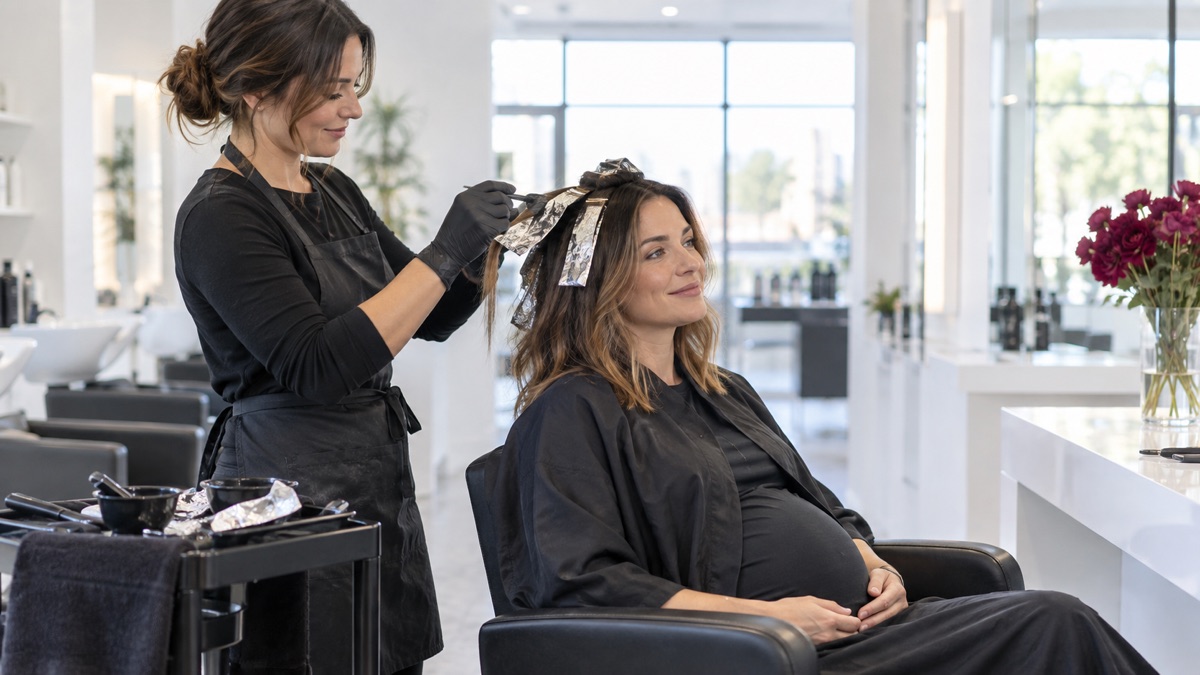
| Highlights or balayage | Product is placed on strands rather than rubbed into the scalp | A practical way to minimize skin contact |
There is no useful rule that “natural” automatically means safer. Pure henna is different from so-called black henna, which may contain sensitizing dye ingredients, and botanical formulas can still cause allergy. Likewise, “ammonia-free” products often use another alkalizer; lower odor is pleasant, but it is not a complete safety assessment.
How to color your hair more cautiously while pregnant
- BeforeAsk your prenatal clinician if your pregnancy or health history changes the general advice.
- 48 hours aheadPerform the allergy test exactly as the product directs. Pregnancy can change skin sensitivity, and previous tolerance does not guarantee the next use.
- Also testColor one hidden strand. Hormonal and texture changes can make the result develop differently than it did before pregnancy.
- DuringWear gloves and ventilate the room. Keep product off broken, scratched, or inflamed skin.
- TimingUse the minimum time required by the instructions and never exceed the maximum.
- AfterRinse the scalp thoroughly. Stop immediately for burning, swelling, hives, or breathing symptoms.
These steps line up with both NHS and FDA hair-dye guidance: test every time, wear gloves, do not leave color on longer than directed, rinse well, and never mix different dye products.
When it makes sense to postpone
- Your scalp has eczema, psoriasis, scratches, infection, or an active reaction.
- You have previously reacted to PPD or another hair-color ingredient.
- The smell triggers severe nausea, migraine, or breathing symptoms.
- You would need a long, aggressive correction with repeated lightener on compromised hair.
- Your obstetrician or midwife recommends avoiding it based on your individual pregnancy.
Occupational exposure is a separate question from coloring your own hair every few months. Hairdressers handle dyes, lighteners, sprays, and solvents repeatedly. If that is your job, discuss ventilation, gloves, skin protection, and workplace accommodations with your prenatal clinician and employer.
What about breastfeeding?
Hair-dye absorption through a healthy scalp is small, so occasional coloring is generally considered compatible with breastfeeding. Still, keep the baby away from processing products and fumes, wash dye from the skin thoroughly, and ask a clinician if you have scalp damage or need repeated intensive services.
The bottom line
The evidence is reassuring but not absolute: occasional hair coloring has not been shown to cause adverse pregnancy outcomes, and scalp absorption is low. Waiting until after 12 weeks is an optional extra-cautious choice. Highlights reduce scalp contact further. Whatever method you choose, the non-negotiables are ventilation, gloves, correct timing, an allergy test, a strand test, and advice from the clinician who knows your pregnancy.
Frequently Asked Questions
-
Available evidence has not shown that occasional hair coloring causes adverse pregnancy outcomes, but some people choose to wait until after week 12 as an extra precaution during early fetal development. Ask your prenatal clinician about your circumstances.
-
Highlights and balayage reduce exposure because the product is applied to strands rather than rubbed across the scalp. Good ventilation and normal product precautions still matter.
-
Semi-permanent direct dye skips developer, but it can still contain pigments and preservatives that irritate or trigger allergy. It is not automatically risk-free; patch-test and use it only on a healthy scalp as directed.
-
Lower odor may make the appointment more comfortable, but ammonia-free formulas can use other alkalizers. The label alone does not establish pregnancy safety. Minimizing scalp contact, ventilating, and following directions are more useful precautions.
-
It can. Texture, oil production, sensitivity, and previous processing can make color grab or develop differently. The NHS recommends a strand test even for a familiar product.
-
Because absorption through a healthy scalp is low, occasional coloring is generally considered compatible with breastfeeding. Keep processing products away from the baby, rinse thoroughly, and ask a clinician if your scalp is damaged or your exposure is frequent.