Demi vs. Semi-Permanent Hair Color: The Difference Is the Developer
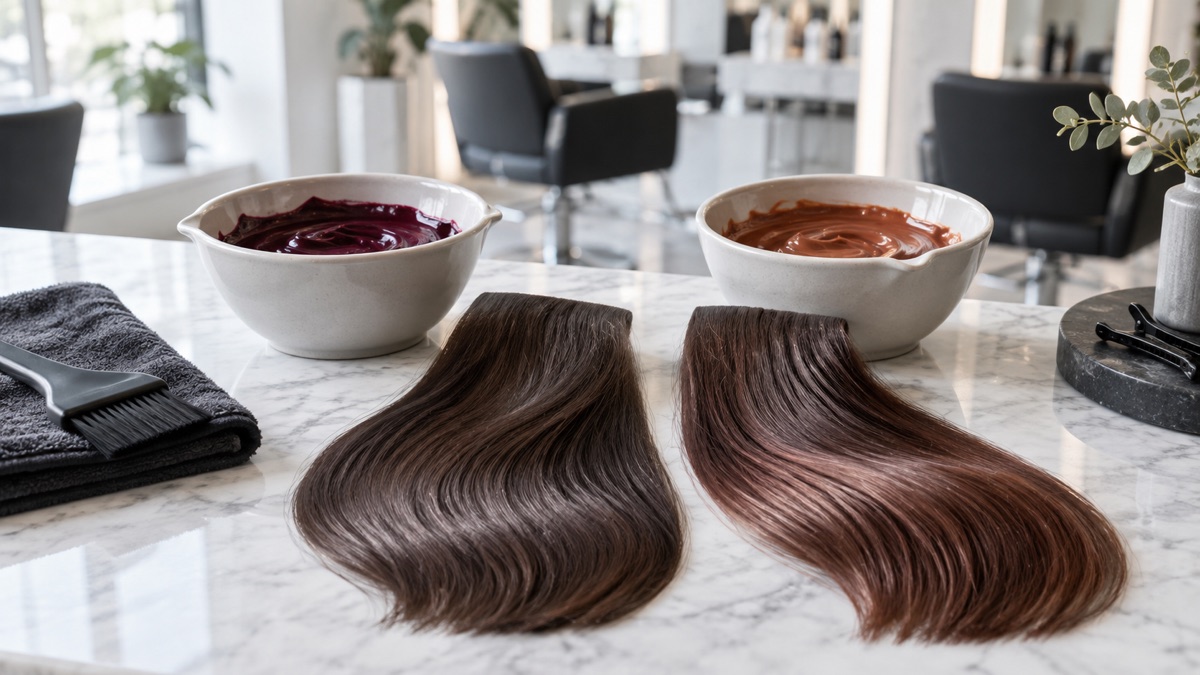
The names make demi- and semi-permanent color sound like neighboring stops on the same scale. They are not. The useful difference is developer: demi-permanent color is mixed with a low-strength developer, while true semi-permanent color goes straight from its tube or jar onto the hair.
That one difference changes how deeply the pigment sits, how long it hangs around, how well it blends gray, and how predictable the fade will be. If you remember nothing else, check whether the product requires a separate developer. That tells you more than the front of the box.
| Demi-permanent | Semi-permanent | |
|---|---|---|
| Developer | Yes, usually low-volume | No |
| Where pigment sits | Just inside the outer layers of the hair | Mostly on and around the cuticle |
| Typical lifespan | About 24–28 washes | About 10–20 washes |
| Best at | Glossing, toning, deepening, refreshing faded color, blending early gray | Trying a shade, vivid colors, temporary tone shifts, topping up fashion color |
| Can it lighten? | Not meaningfully in most at-home uses | No |
| Regrowth line | Soft | Usually very soft |
Those wash counts are estimates, not expiry dates. Wella Professionals puts demi color at roughly 28 washes and semi color at 10–20, but porous, bleached hair can hold either one much longer—especially blue, green, red, and other saturated shades.
What is demi-permanent hair color?
Demi-permanent hair color is a deposit-focused color mixed with a mild developer. The alkalizing system gently swells the cuticle so some dye molecules can settle inside the outer part of the hair shaft. It does not penetrate or lift like permanent color, but it goes farther than a direct semi-permanent dye.
That makes demi color the quiet workhorse of salon color. It can turn dull brown glossy again, tone highlights after lightening, deepen a shade without creating a hard root line, and soften the contrast of first grays. It is often what a colorist means by a gloss or glaze, although those marketing terms are not perfectly standardized.
You like your current level but want it richer, cooler, warmer, or shinier; your permanent color has faded through the mid-lengths; or you want gray blending rather than opaque gray coverage.
Demi is gentler than permanent color, not consequence-free. It still uses developer, can deepen porous ends faster than healthy roots, and may leave a lasting tonal shift after the shine fades. Going “just one shade darker” repeatedly is how demi color quietly becomes color buildup.
What is semi-permanent hair color?
Semi-permanent hair color is a direct dye: preformed pigment that is applied without developer. It mainly stains the cuticle and the outer surface of the strand instead of using oxidation to create color inside it.
That is why semi color is ideal for low-commitment experiments and vivid shades. It can make brown hair look richer, add copper or burgundy over an existing base, refresh pink or blue, and give pre-lightened hair a pastel or jewel tone. What it cannot do is make dark hair blonde. Color does not lift color, and direct dye has no lightening mechanism at all.
You want a shade that fades sooner, you are topping up a vivid color, or you want to see how a tone behaves before making a longer commitment. On dark, unlightened hair, expect a tint or reflect—not the bright swatch shown on white-blonde hair.
Which one should you choose?
| Your goal | Better choice | Why |
|---|---|---|
| Refresh faded brunette or red | Demi | Longer wear and a more polished, dimensional result |
| Tone freshly highlighted hair | Demi | Reliable neutralization and shine |
| Try pink, blue, purple, or copper | Semi | Direct dyes offer the widest vivid range |
| Blend a small amount of gray | Demi | Better penetration and staying power |
| Cover resistant gray completely | Permanent | Neither temporary category is built for opaque coverage |
| Go lighter | Lightener or permanent color | Semi cannot lift; demi is not a dependable route to a visibly lighter level |
| Lowest-commitment test | Semi | No developer and a faster fade |
The catch: labels are not perfectly consistent
Hair-color naming is messier than shoppers deserve. “Gloss,” “glaze,” “tone-on-tone,” “deposit-only,” and even “semi-permanent” can be used differently from one brand to another. Ignore the poetry and inspect the kit.
- A separate developer bottle means the formula behaves like a demi or permanent oxidative color.
- A ready-to-use jar, tube, mask, or conditioner with no mixing step is usually semi-permanent direct dye.
- A promise to lighten several levels means it is not a true semi-permanent color.
The instructions are the final authority. Never add developer to a direct dye, never substitute a stronger developer, and never mix two color systems. The FDA advises following the package directions, wearing gloves, and performing the instructed skin test every time—even if you have used the shade before.
How both formulas fade
Semi color generally fades first, but “washes out” does not mean “returns every strand to its exact starting color.” Bleached and porous hair behaves like a more absorbent fabric: it takes pigment quickly and releases it unevenly. Demi color can expose warmth as its cool pigments fade, while vivid semi colors may leave a pastel cast behind.
To make either last longer, wash less often, use comfortably cool rather than hot water, and choose a gentle color-safe shampoo. To make a disappointing shade fade faster, start with the least aggressive route in our guide to stripping color from hair before reaching for bleach.
The bottom line
Pick demi for polish and staying power; pick semi for experimentation. Demi uses developer and sits a little deeper. Semi skips developer and stays closer to the surface. Neither one reliably lightens hair, neither guarantees a complete gray cover, and neither has a perfectly predictable fade on bleached or porous strands. A strand test is the ten-minute preview that prevents the month-long surprise.
Frequently Asked Questions
-
It is generally gentler than permanent color because it uses a lower-strength developer and is designed mainly to deposit. It can still dry hair, darken porous ends, or add cumulative buildup. Semi-permanent direct dye is the lower-impact option when no pre-lightening is involved.
-
It blends early gray better than semi color, softening the contrast instead of creating an opaque block. Resistant or mostly gray hair usually needs permanent color for full coverage.
-
Often, but not always. Very light, bleached, damaged, or porous hair can retain a stain long after the expected wash count, especially with blue, green, red, and intense fashion shades.
-
Most demi formulas are chosen to deposit, tone, or deepen, not to make a visible jump lighter. A few professional systems may create very subtle lift with their specified developer, but demi is not the right category for going several levels lighter.
-
Yes, but remaining direct pigment changes the canvas and can make the result darker or muddier than the swatch. Fade the semi color first and strand-test the demi formula on a hidden section.