How to Strip Color From Hair Without Making It Worse
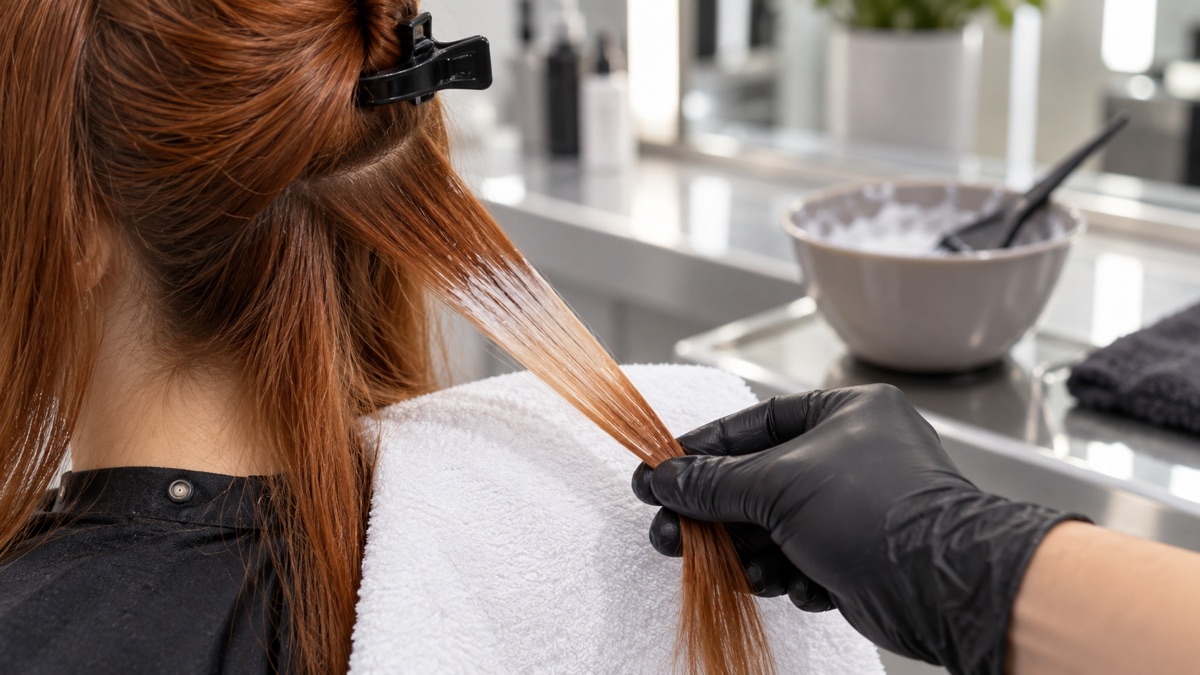
The safest way to strip color from hair is to stop treating every dye like the same stain. Semi-permanent direct dye can often be faded with washing. Oxidative demi- and permanent color usually need a purpose-made color remover. Bleach is the last resort, not the first step.
Before you do anything, answer two questions: what kind of color did you use, and what condition is your hair in now? Those answers matter more than whether a viral recipe promises to work in twenty minutes.
| What is in your hair? | Start here | What to expect |
|---|---|---|
| Temporary spray, wax, chalk | Regular shampoo | Usually one to three washes |
| Semi-permanent direct dye | Clarifying shampoo and time | Faster fading, possible residual stain on porous hair |
| Demi-permanent color | Clarify first; then a compatible color remover if needed | Warmth may remain |
| Permanent oxidative color | Purpose-made oxidative color remover or a colorist | Your natural shade will not simply reappear |
| Black box dye, repeated layers, henna, or metallic salts | Colorist | High risk of patchy results or damaging reactions |
First, identify the color
If the product went straight from one jar or tube onto your hair with no developer, it was probably semi-permanent direct dye. If you mixed color with a second bottle, it was an oxidative demi or permanent formula. Our demi vs. semi-permanent guide explains the distinction in detail.
Do not guess when henna or a metallic-salt dye may be involved. Some products sold as “natural” can react unpredictably with lightener or oxidative color. Keep the packaging and take it to a colorist.
How to fade semi-permanent color
- Step 1Wash with a clarifying shampoo. Use comfortably warm—not scalding—water, work the shampoo through the colored lengths, and rinse thoroughly.
- Step 2Condition generously. Faster fading is not useful if repeated detergent washing leaves the hair brittle.
- Step 3Repeat gradually. One or two extra clarifying washes across several days is more controlled than five aggressive washes in one night.
- Step 4Reassess in daylight. Blue, green, red, and black direct dyes may leave a stain on bleached hair even after the obvious color fades.
Skip dish detergent, laundry detergent, undiluted baking soda, and mystery mixtures of crushed tablets. They are hard to dose, rough on the scalp, and less predictable than a product designed for hair. A dry, irritated scalp and swollen cuticle do not make the next correction easier.
How to remove demi- or permanent color
Oxidative color removers work differently from bleach. Many are designed to reduce or shrink artificial oxidative dye molecules so they can be rinsed from the hair. Follow the remover's instructions exactly, use enough product to saturate every section, and do not shorten the rinse: incomplete rinsing can allow color molecules to darken again.
Permanent dye changes more than the artificial shade. Its developer may also lighten your natural melanin underneath. Removing the added pigment therefore reveals the warm orange, gold, or red base created during coloring—not your untouched original color. L'Oréal's own remover guidance makes the same point: removing permanent artificial color does not restore the natural shade.
Always test a hidden strand first. It shows how much color moves, what warmth appears, and whether the hair can tolerate the process. If the test strand becomes gummy when wet, stretches without springing back, or snaps with light tension, stop.
Why bleach should be the last option
Bleach breaks down natural and artificial pigment indiscriminately. It can remove color that a reducer cannot, but it also strips protective material from the hair fiber. Cleveland Clinic notes that bleaching and lightening weaken the shaft and make it more vulnerable to breakage.
That trade-off may be reasonable in a planned salon correction. It is a poor first move on hair that is already highlighted, relaxed, permed, repeatedly box-dyed, or breaking. Dark permanent color rarely becomes an even blonde in one session; it becomes a sequence of red, orange, gold, and pale yellow, with the most porous sections moving first.
When to stop and book a colorist
- Your hair contains black permanent dye or several overlapping applications.
- You want to go more than two levels lighter.
- You used henna, progressive dye, or do not know what formula is on the hair.
- The hair feels gummy, stretchy, rough, or breaks easily.
- Your scalp is sore, blistered, scratched, or inflamed.
- A strand test turns patchy or produces unexpected heat, odor, or texture.
A correction consultation is not an admission of defeat. Bring a color history: product names, approximate dates, where each application overlapped, and any bleach, keratin, relaxer, or perm service. That history is more valuable than a filtered photo of the target shade.
What to do after stripping color
Rinse exactly as directed, condition, and judge the hair dry. Do not stack a remover, bleach, and new box dye into one improvised evening unless the specific product instructions explicitly form a single process and your strand test supports it. Porous hair can grab the next shade darker than expected, so choose cautiously and test again.
If you recolor, follow the package directions and perform the required allergy test. The FDA specifically warns against mixing different hair-dye products and recommends gloves, correct timing, and thorough rinsing.
The bottom line
Fade direct dye; reduce oxidative dye; reserve bleach for a controlled correction. The goal is not to remove the maximum amount of color in one sitting. It is to remove enough color while leaving hair strong enough to look good afterward.
Frequently Asked Questions
-
Clarifying shampoo can speed the fade of semi-permanent direct dye and may soften a fresh demi shade. It will not reliably remove permanent oxidative color, and repeated washing can make hair dry.
-
It may fade some surface color, but it is alkaline, difficult to dose, and can leave the scalp irritated and hair rough. A clarifying shampoo or purpose-made remover is more predictable.
-
It can cause dryness and odor, and formulas vary. Oxidative color reducers are generally more targeted than bleach because they act on artificial dye molecules rather than aggressively lightening all pigment. Strand-test and follow the instructions.
-
Follow the remover's directions; some systems are designed for immediate recoloring, while compromised hair needs recovery time. Judge elasticity and breakage, not just the calendar, and strand-test the new color because porous hair may turn darker.
-
A reducer may move some artificial black, but repeated applications and overlapping lengths make the outcome unpredictable. If the goal is substantially lighter, a colorist is the safer route.