Skincare for Menopausal Skin: Eight Changes, Eight Different Fixes
Skin loses about 30% of its collagen in the first five years of menopause, then about 2% a year. But collagen is only one of eight separate changes — and each one has its own cause and its own answer.
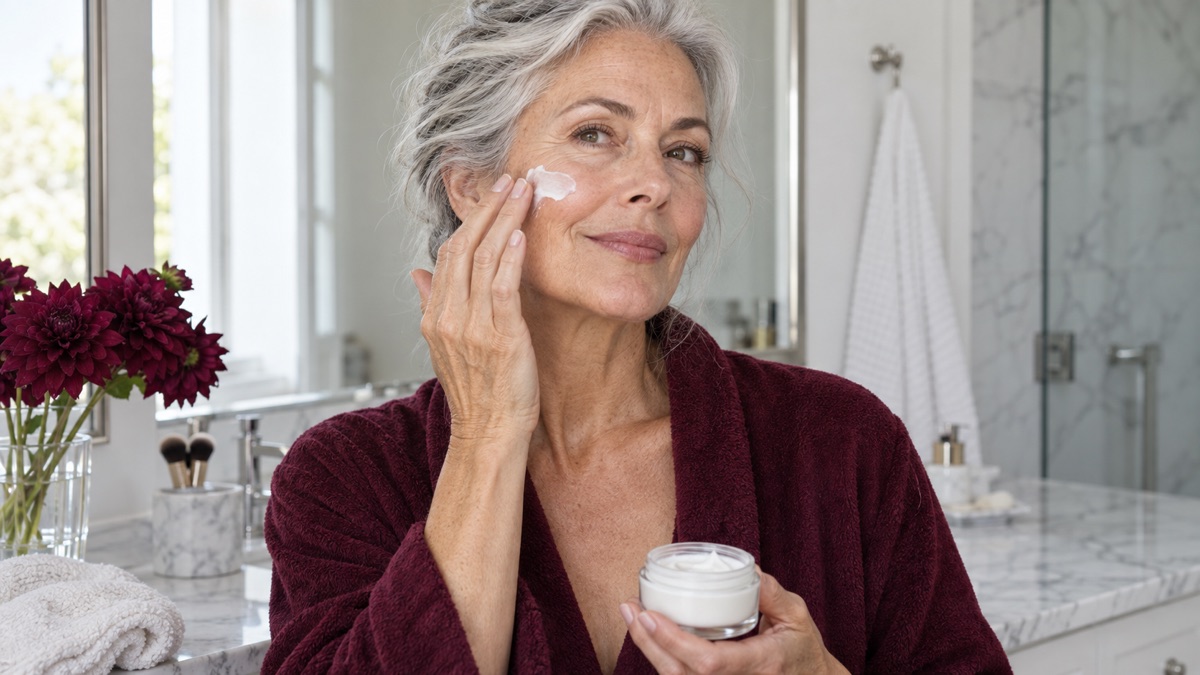
Menopause officially begins one year after your last period, and it changes skin in ways that are specific rather than vague. As hormone levels fall, the American Academy of Dermatology describes skin becoming dry, slack and thin, with more hair appearing on the face and less on the scalp.
The useful thing about that list is that each change has a different cause and a different fix. "Anti-aging" products treat them as one problem. They are about eight.
Eight changes, eight different answers
| What you notice | Why it happens | What dermatologists recommend |
|---|---|---|
| Dry skin | Skin loses some of its ability to hold water | A mild cleanser instead of soap; moisturizer with hyaluronic acid or glycerin after bathing and through the day |
| Sagging, jowls, deeper wrinkles | Rapid collagen loss — about 30% in five years | Daily sun protection, and a product containing retinol or peptides, which can increase collagen |
| Thinner skin that bruises easily | Falling estrogen thins the skin | Daily SPF 30+ — it cannot thicken skin, but it prevents further thinning; ask a dermatologist about retinoids or laser |
| Age spots and dark patches | Years of sun exposure becoming visible | See a dermatologist before treating — skin cancer can look like an age spot |
| Adult acne | Falling female hormone levels | A salicylic acid cleanser; avoid drying acne products; a hormonal treatment may be needed |
| Sensitivity and rashes | Around 50, skin pH changes and skin becomes more reactive | Fragrance-free moisturizer; see a dermatologist if eczema or rosacea worsens |
| Facial hair on chin, jaw, upper lip | Falling female hormone levels | Care with waxing — thin skin can tear and bleed; laser or a prescription cream via a dermatologist |
| Thinning scalp hair | Hormonal change; first sign is often a widening part | See a dermatologist early — results are better the earlier treatment starts |
The routine that fits this skin
- CleanseA mild, non-soap cleanser. The AAD notes soap can be too drying for mature skin, and to skip deodorant bars entirely. If your skin feels tight after washing, the cleanser is part of the problem.
- TreatA retinol or peptide product, at night. These are the two ingredient types the AAD names for increasing collagen. Start low and slow — see retinol vs retinal — because this skin tolerates less than it used to.
- MoisturizeHyaluronic acid or glycerin, applied after bathing and again whenever skin feels dry. Fragrance-free, given the increased sensitivity. On very dry patches, an occlusive on top helps — see slugging.
- ProtectBroad-spectrum SPF 30 or higher, every day, even in winter. It fades age spots, prevents new ones, prevents further thinning, and reduces skin cancer risk. It is the highest-value step on this list.
- CheckA skin cancer screening, and regular self-exams. Risk rises with age, and earlier detection is more treatable.
Buying a dark-spot treatment for a new brown mark. The AAD's warning is explicit: skin cancer sometimes looks like an age spot, and using a fading treatment on it can lighten the spot and delay treatment, giving the cancer time to grow. Any new, changing or unusual spot gets a dermatologist's look first. Brightening serums come second.
What to stop doing
Several habits that were fine at 35 work against skin at 55. The common thread is that thinner, drier, slower-healing skin has less margin for friction and irritation.
Start or keep
- Daily SPF 30+, all year
- A mild cleanser and a fragrance-free moisturizer
- A retinol or peptide product introduced gradually
- Patch testing new products — reactivity rises around 50
- Annual skin cancer checks
Stop or rethink
- Bar soap and deodorant bars on the face
- At-home exfoliation or microdermabrasion — the AAD advises seeing a dermatologist first, as thinner skin can be harmed
- The acne products you used as a teenager; they are usually too harsh now
- Waxing skin that has become thin enough to tear
- Treating dark spots before a dermatologist has seen them
Acne at 50: why the old playbook fails
Some women develop teenage-like acne as hormone levels drop before and during menopause — and the AAD notes that adult-onset acne is most common among women going through menopause. The trap is reaching for the drying products that worked decades ago. Because skin is now thinner and drier, the AAD recommends a salicylic acid cleanser to unclog pores and avoiding acne products that dry the skin, since drying can make acne worse. If it will not settle, a hormonal treatment may be needed. Skincare for hormonal acne covers the options in detail.
Where to spend your effort
- Skin feels tight and dry all dayChange the cleanser firstThen add a hyaluronic acid or glycerin moisturizer, applied more often
- Sagging and deeper lines bother you mostRetinol or peptides, plus SPFSun protection reduces visible wrinkles and prevents new ones
- A new or changing dark spotDermatologist, before any productRule out skin cancer first
- Everything suddenly stingsStrip back to fragrance-free basicsSkin pH shifts around 50 and reactivity rises
- Your part is wideningSee a dermatologist nowHair loss treatment works better the earlier it starts
- Wondering about hormone therapy for your skinA conversation with your doctorHormone therapy decisions involve far more than skin
The short version
Menopausal skin needs less friction and more protection, not more products. Daily sunscreen, a gentle cleanser, a fragrance-free moisturizer with hyaluronic acid or glycerin, and a retinol or peptide product introduced slowly cover the evidence-backed ground. Add a dermatologist for the things skincare cannot and should not handle alone: new spots, stubborn acne, thinning hair and unwanted facial hair.
Related reading
- Skincare for hormonal acne — when breakouts return during perimenopause
- Retinol vs retinal — choosing and starting a retinoid on more sensitive skin
- How often to exfoliate — and why thinner skin changes the answer
Frequently Asked Questions
-
Not fully, but some of it can be supported. The AAD names retinol and peptides as ingredients that can increase collagen in skin, and daily sun protection reduces visible wrinkles and prevents new ones. What skincare cannot do is reverse a roughly 30% loss over five years. Set expectations around improving texture and slowing further change rather than turning the clock back.
-
Around age 50, the pH of skin changes, and the AAD notes that skin becomes more sensitive and more prone to rashes and irritation as a result. Existing conditions such as eczema or rosacea can also worsen. The practical response is to strip your routine back to fragrance-free basics, introduce new products one at a time with a patch test, and see a dermatologist if a rash persists.
-
For most people, yes — it is one of the two ingredient types the AAD specifically recommends for collagen. The adjustment is pace. Thinner, drier, more reactive skin tolerates less, so start with a low concentration two nights a week, always follow with moisturizer, and increase frequency slowly. If you have rosacea or very sensitive skin, talk to a dermatologist before starting.
-
Have a dermatologist look at them before you buy anything. Most will be sun-related age spots, but the AAD warns that skin cancer can resemble an age spot — and fading a cancerous spot with a brightening product can delay diagnosis. Once a dermatologist has confirmed what they are, daily sunscreen helps fade existing spots and prevent new ones.
-
As female hormone levels fall before and during menopause, some women develop teenage-like acne, and adult-onset acne is most common in women going through menopause. Because skin is now thinner and drier, the AAD recommends a salicylic acid cleanser and avoiding acne products that dry the skin. If it does not come under control, a dermatologist may recommend a hormonal treatment.
-
Be cautious. The AAD notes that if skin becomes too thin, waxing can tear it and cause bleeding. Laser hair removal and a prescription hair-reduction cream are alternatives, and the AAD recommends laser treatment be performed by a board-certified dermatologist — the risk of side effects rises sharply without medical training.